Hong Kong boasts a vibrant array of Cantonese cuisine and a diverse array of high-end Japanese restaurants. However, Fujian cuisine has been relegated to a relatively small share of the refined Chinese culinary scene. But this may be about to change this year. The upcoming Michelin-starred Shanghai restaurant "Meet the Bund," along with "Quan Hui Guan" already located in the China Construction Bank Building, and "Hokkien House," which we'll be introducing today, mark the arrival of three heavyweight Fujianese representatives in Hong Kong, giving authentic Fujianese refinement a strong foothold in the city's high-end dining landscape.
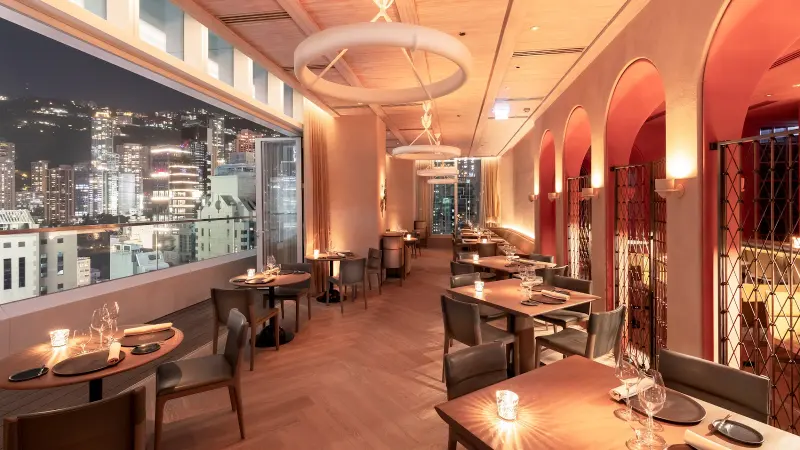
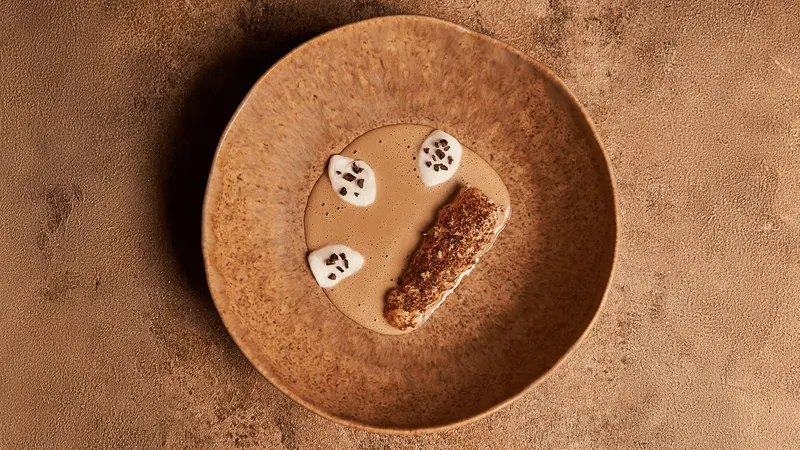
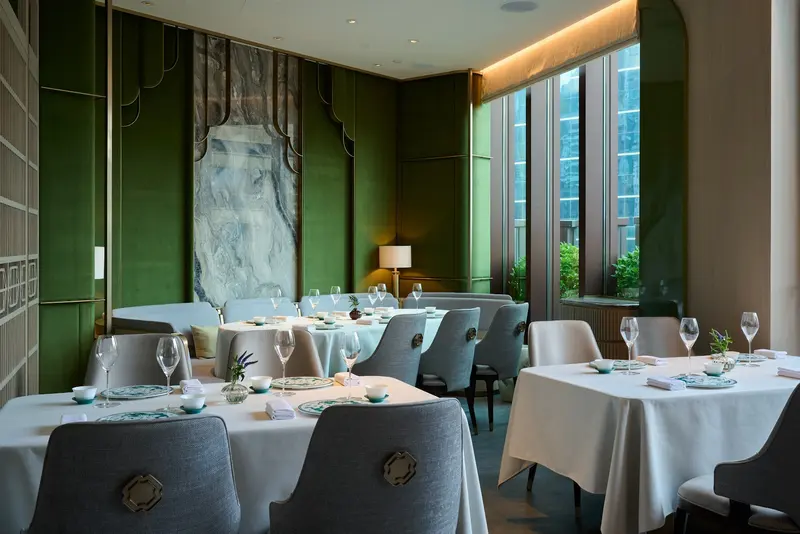
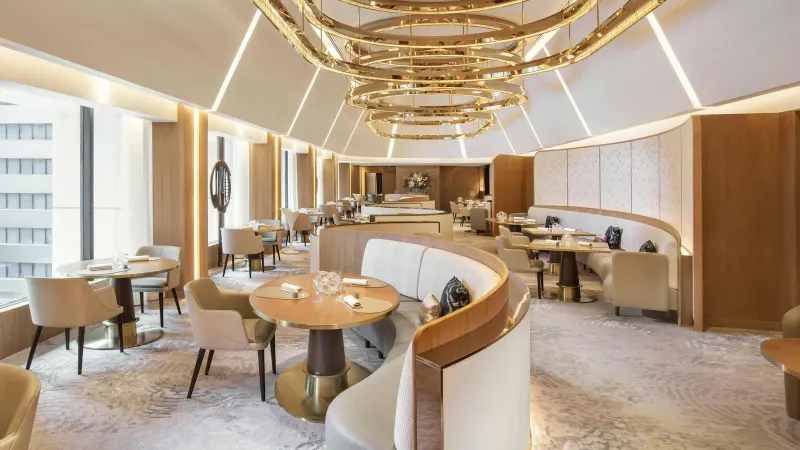
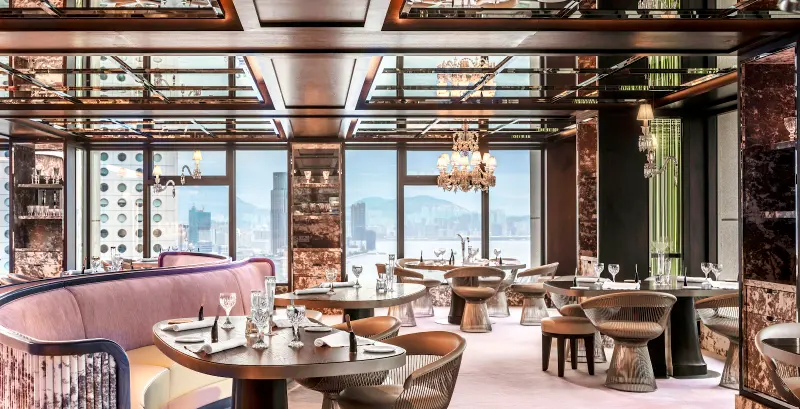
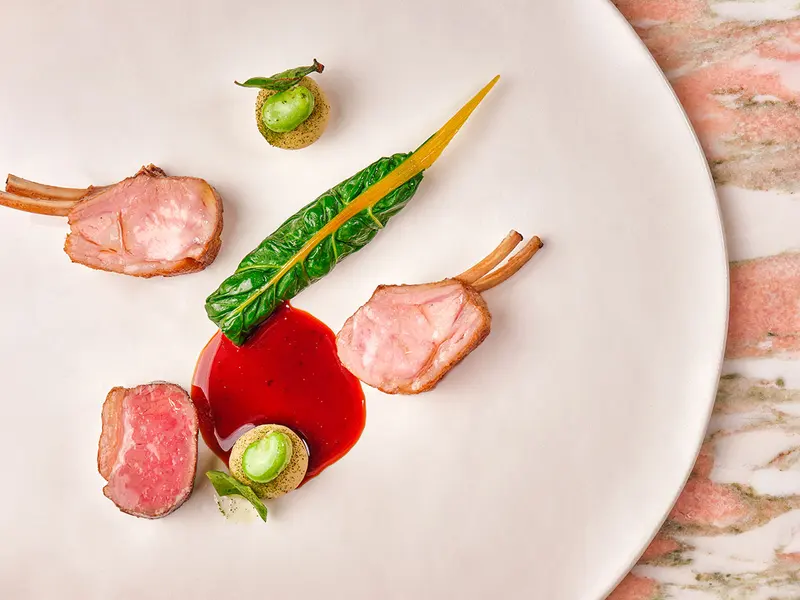
Upon entering Hokkien House, one is immediately struck by the attention to detail. Designed by Ju Bin, Chief Creative Director of the renowned Chinese design brand "Horizontal Line Design," the space primarily utilizes Jinjiang stone, bamboo, porcelain, and wood, with the traditional garden concept of "a scene at every turn" permeating every corner. In the main hall, a round tea table with a cloth lacquer finish displays sculptor Jiang Sheng's "Fu Lu Shou" (Fortune, Prosperity, and Longevity), crafted using Fujian cloth lacquer techniques combined with gilding. Custom-made Fujian mutton-fat porcelain tableware features blank patterns, guiding the eye back to the food on the plates. Coincidentally, You Zhenlong, the head chef of Fu Shang, adheres to the culinary philosophy of "subtraction." He prioritizes understanding the ingredients, respecting their inherent flavors, and avoiding the pursuit of visual appeal through elaborate presentation. Here, the philosophy of ingredients and the philosophy of culinary art are aligned. Chef You Zhenlong hails from Zhangzhou, Fujian, and has cultivated his culinary skills for nearly 20 years. He apprenticed under Fujian cuisine master Wu Zhiqiang, and previously served as the executive chef of Luchengxuan at the Conrad Xiamen Hotel, leading the restaurant to Michelin Guide recognition. In 2025, he received the inaugural Fujian Province Michelin Guide Young Chef Award—a truly impressive background.
After being seated, I noticed that the serving chopsticks were printed with the character "福" (Fu, meaning fortune/blessing), while the personal chopsticks were printed with the character "上" (Shang, meaning above/upper). Out of curiosity, I asked why they weren't both printed with "福上" (Fu Shang, meaning fortune and above) on a single pair of chopsticks. Whether prepared or impromptu, the waiter explained, "The 'Fu' (福, meaning good fortune) stamp on the serving chopsticks symbolizes sharing happiness, while the stamp on your personal chopsticks represents your own flourishing success." I was amazed. If it was a prepared explanation, the restaurant's attention to detail was truly impressive; if it was impromptu, it proved the restaurant had a keen eye for talent.
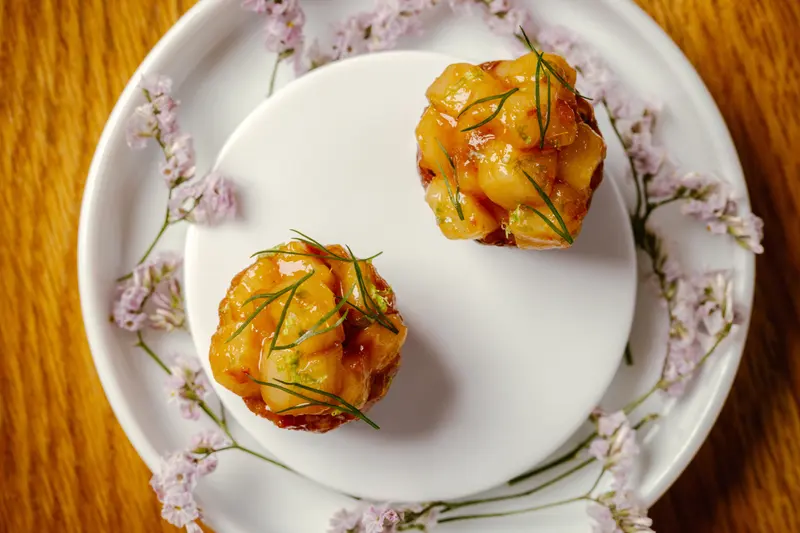
That evening's menu spanned the mountains and seas of Fujian, with several dishes worth mentioning. The poached Dongshan squid was made with carefully selected wild-caught large squid from the waters off Dongshan Island. It was poached and served cold, accompanied by three Minnan sauces: garlic chili sauce, scallion sauce, and Puning bean sauce. The meat was firm and crisp, with an unadulterated freshness. The vinegar-seaweed fish jelly with pomfret rice featured chef You selecting oily pomfret (also known as Hong Kong pomfret), deboning and steaming it before letting it cool. It was then topped with a layer of natural fish jelly in broth, and underneath was a base of Zhangzhou seaweed pickled in Fuzhou Mintian rice vinegar. The four flavors—clear, fresh, sour, and crisp—emerged in each bite, truly embodying the essence of Fujian cuisine.
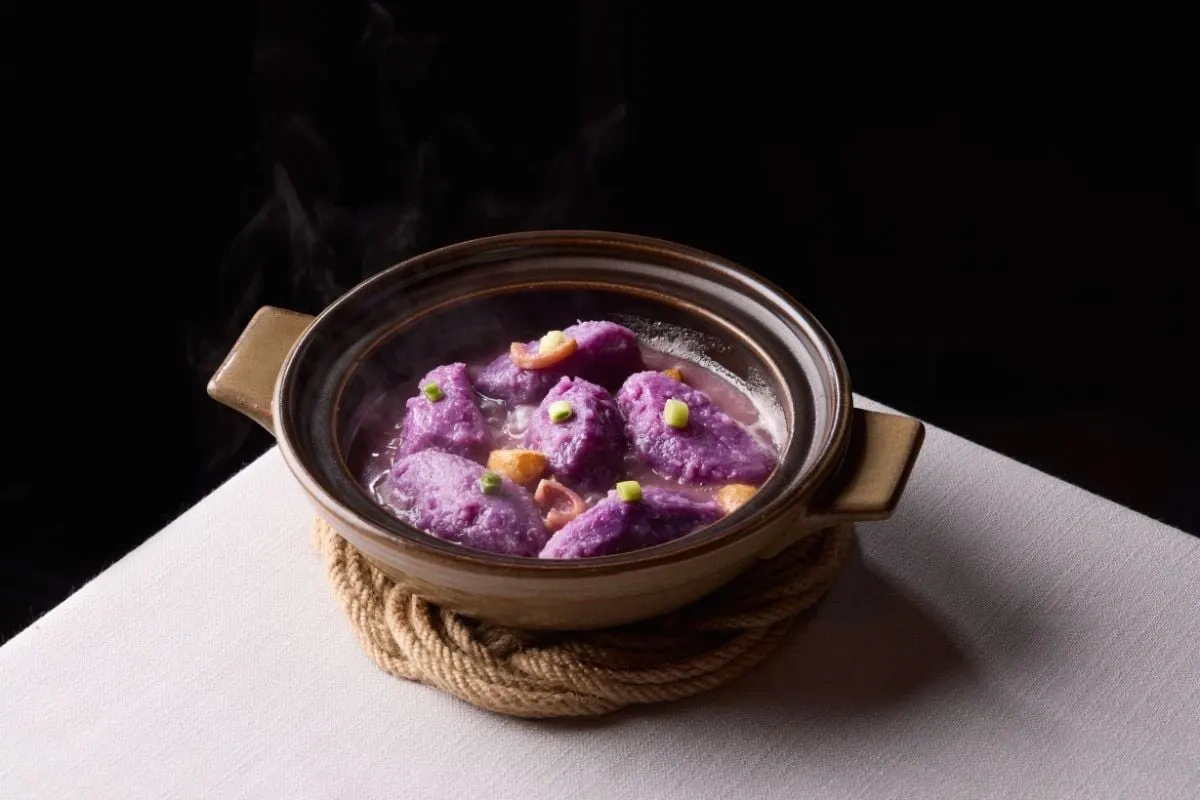
The Mangrove Crab Steamed Rice Cake uses mud crabs from the brackish waters of the Zhangzhou mangrove forests. The crab roe is smooth and creamy, and the meat is sweet and tender. It's served on a bed of Kuihu glutinous rice, stir-fried in ginger and duck broth with crab broth. First, small crabs are steamed to infuse the rice with their flavor, then whole crabs with roe are steamed again. The two crab flavors permeate the rice grains layer by layer. When served, the runny crab roe is incredibly appealing, and the glutinous rice is oily, soft, and sticky.
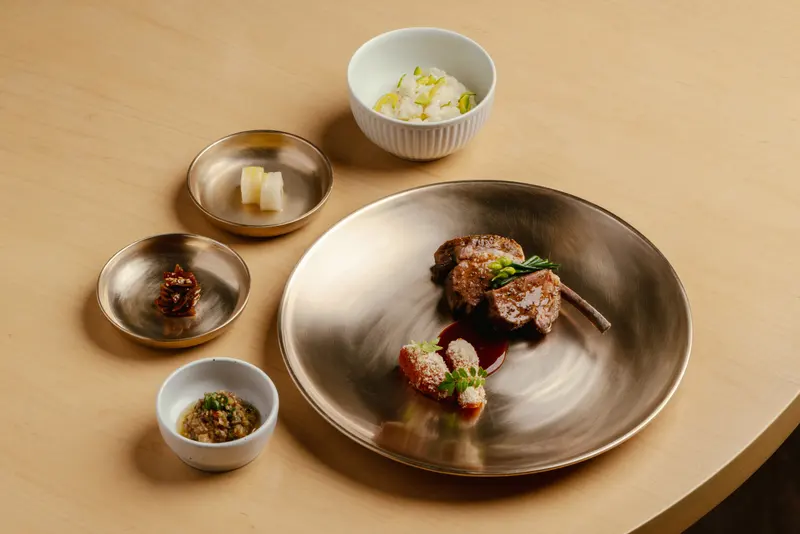
Fuzhou Drunken Pork Ribs inherit the essence of the famous Fujian dish "Drunken Ribs." Pork ribs are fried until crispy on the outside and tender on the inside, then soaked in a secret marinade made with Mintian vinegar and sugar while still hot. Finally, fresh Fuzhou green olives are shredded on top. The sweet and sour flavor, with a touch of bitterness from the olives, is incredibly addictive.
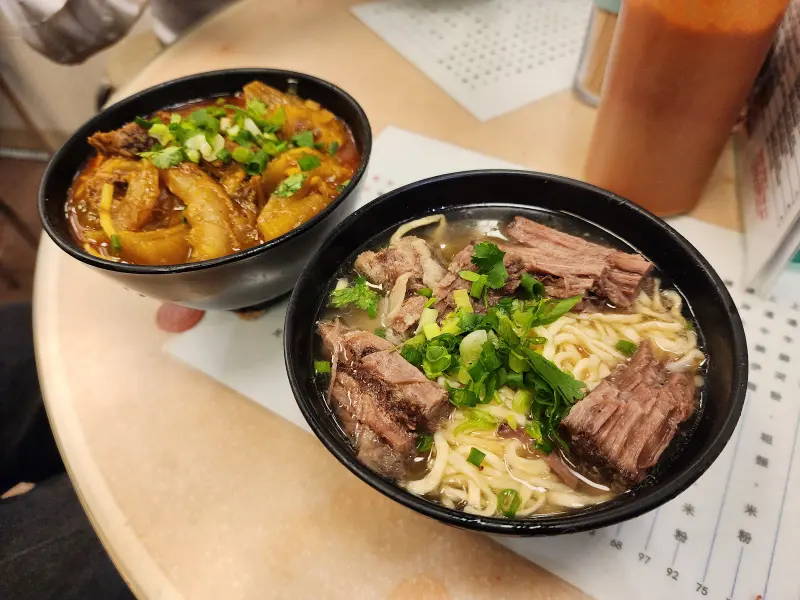
Xiamen satay noodles are made with a satay sauce simmered with dozens of spices including crushed peanuts, dried flatfish, dried shrimp, and galangal. Fish broth is added to dilute it and prevent it from being too greasy. The Fujian-style thin noodles hold the sauce well, offering a perfect balance of sweet, spicy, and savory flavors in every bite.
The tea menu primarily features Fujian teas, with a selection of 36 varieties. Wuyi rock tea and Lapsang Souchong each have their own merits. This evening, we paired them with Tanyang Gongfu 2010, Zhuyexiang Zhaoyan 2019, and Pu'er Ripe Loose 1990s. A more detailed discussion could be devoted to this in a separate post. For wine, wine, spirits, and Chinese yellow wine are presented side-by-side. This evening, we served Domaine Fouassier Sancerre 2023 with cold appetizers; the refreshing, mineral-rich Sauvignon Blanc paired perfectly with the sweetness of the large tube. Michel & Stéphane Ogier Côte-Rôtie 2021 was paired with hot seafood dishes, providing a substantial base without overpowering the natural flavors of the ingredients.
Chef You Zhenlong said, "In the past, cooking was about adding; now it's about subtracting." This statement was borne out in every dish served that evening. Hong Kong has no shortage of exquisite Chinese cuisine, but as mentioned at the beginning, refined Fujian cuisine is relatively rare. It's impossible to sample all the dishes from an entire province in one evening, but the experience at Fu Shang felt like a journey through Fujian itself, exploring the complete culinary history of Fujian cuisine.
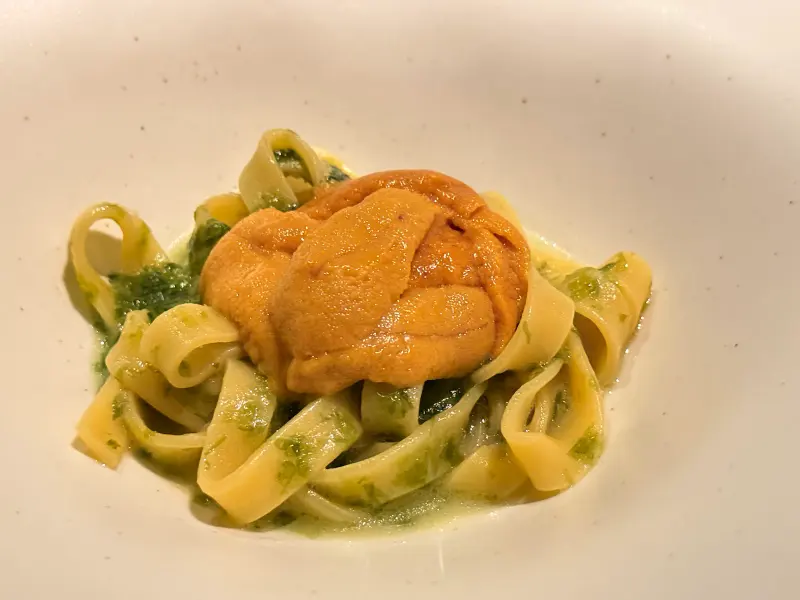
🍽 𝙈𝙚𝙣𝙪 Hand-cooked Dongshan Tuna with Vinegar and Seaweed Fish Jelly with Loofah Rice Fuzhou Drunken Spare Ribs Crispy Fried Dongshan White Shrimp with Oil Tea Oil and Red Mushroom Stew with Hetian Chicken Soup Crispy Five-Spice Rolls Traditional Spring Rolls Frost-Dried Vegetable Stir-Fried Shrimp Steamed Red Crab Rice Cake Yong'an Yellow Pepper Steamed Mandarin Fish Homemade Oyster Omelet with Pickled Radish and Oyster Soup Fushang Ginger Duck Wuyi Spicy Stir-Fried Eel Radish Fist-Shaped Eel Zhao'an Braised Cabbage Xiamen Satay Noodles Salted Lemon Gutian Tremella Jasmine Tea Four-Fruit Soup Baishui Gongtang Rice Pancake Seasonal Fruits
Tea and Wine Pairing Domaine Fouassier Clos Paradis, Sancerre, France 2023 Michel & Stéphane Ogier, 'Mon Village' Côte-Rôtie, France 2021 Tanyang Kung Fu 2010 Bamboo Leaf Fragrance Covering Rocks; 2019 Ripe Pu-erh Tea (Loose Leaf) 1990s