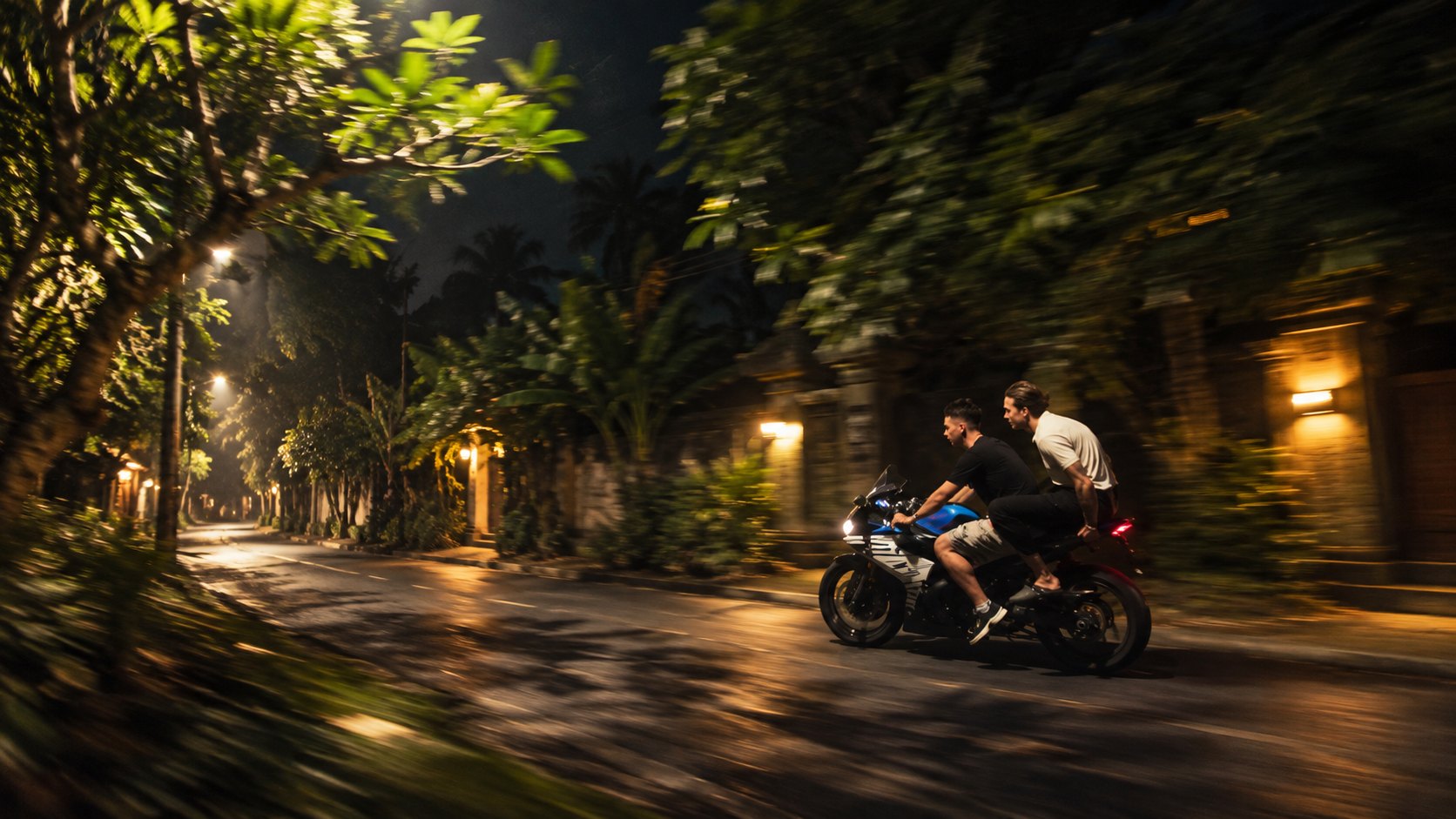
Updated: If You Ride Like an Idiot, Don’t Expect a Table
- openhouse cafeSpecialty Coffee · PererenanView venue
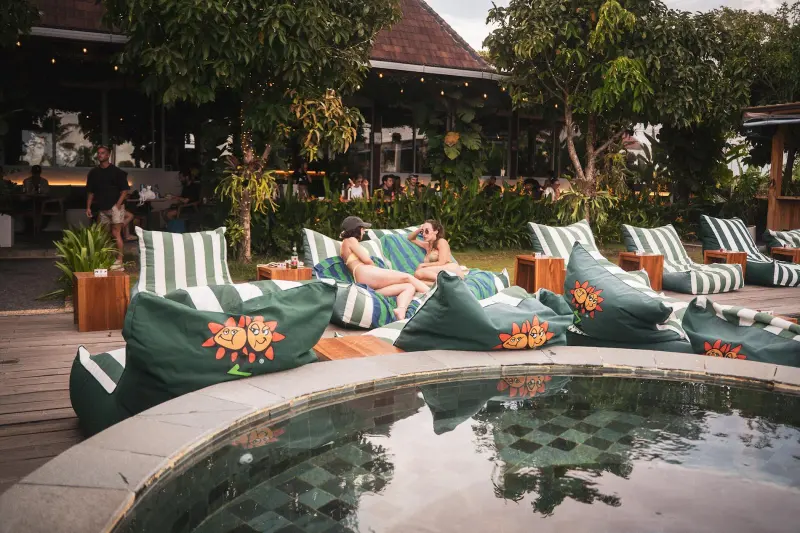
- Osteria Della TerraItalian · PererenanView venue
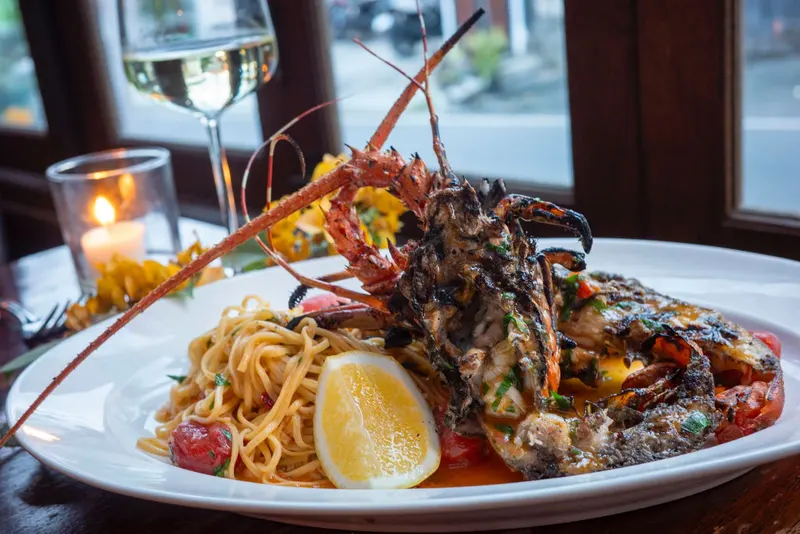
- OrigenMexican · PererenanView venue

- 7AM Bakers | 7PM DinersBakery · PererenanView venue

- FuegoSteak & Grill · PererenanView venue

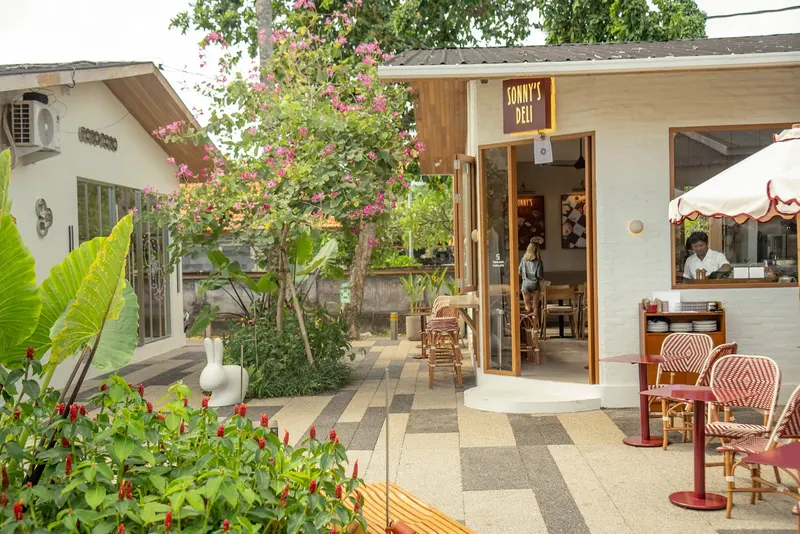
- Sonny’s DeliDeli · PererenanView venue


There is a particular sound that has become part of the soundtrack of this side of Bali. You know it before you see it.
View this post on Instagram
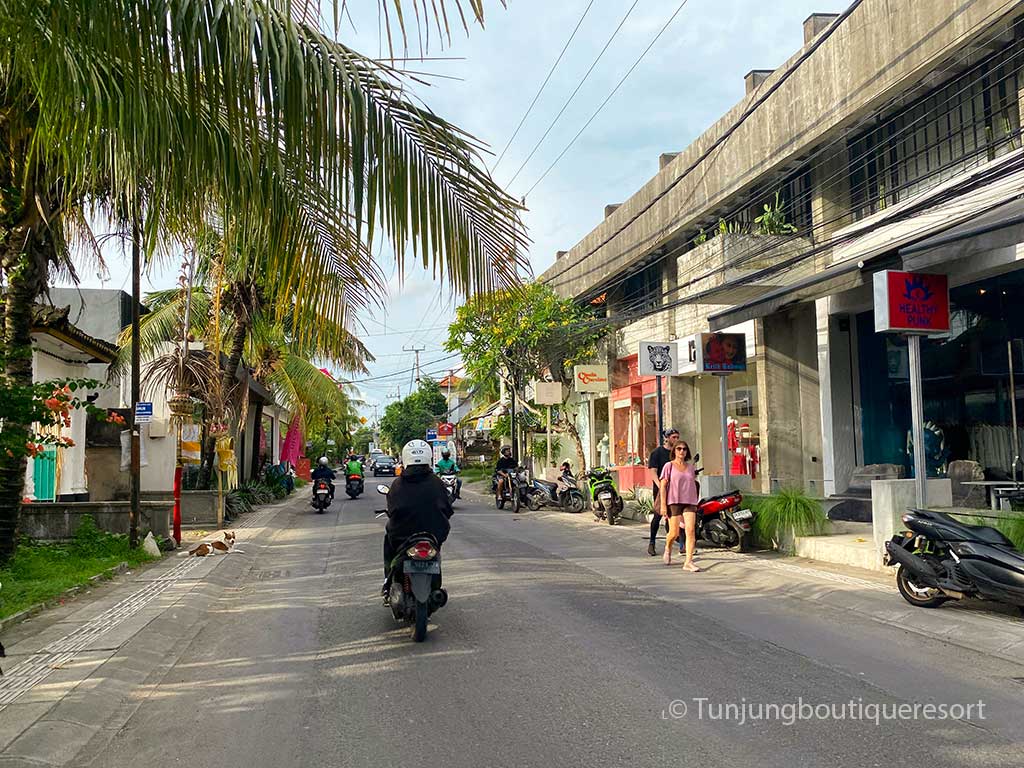
A motorcycle coming far too quickly down a village road, an exhaust modified to make sure everybody within several hundred metres knows about it, followed by the inevitable blast through a corner shared with dogs, kids, restaurant staff, families, elderly residents and someone trying to walk home from dinner.
For months, people around Pererenan have been complaining about it. Actually, months is generous. This conversation has been going on for considerably longer than that.
This week, something changed.
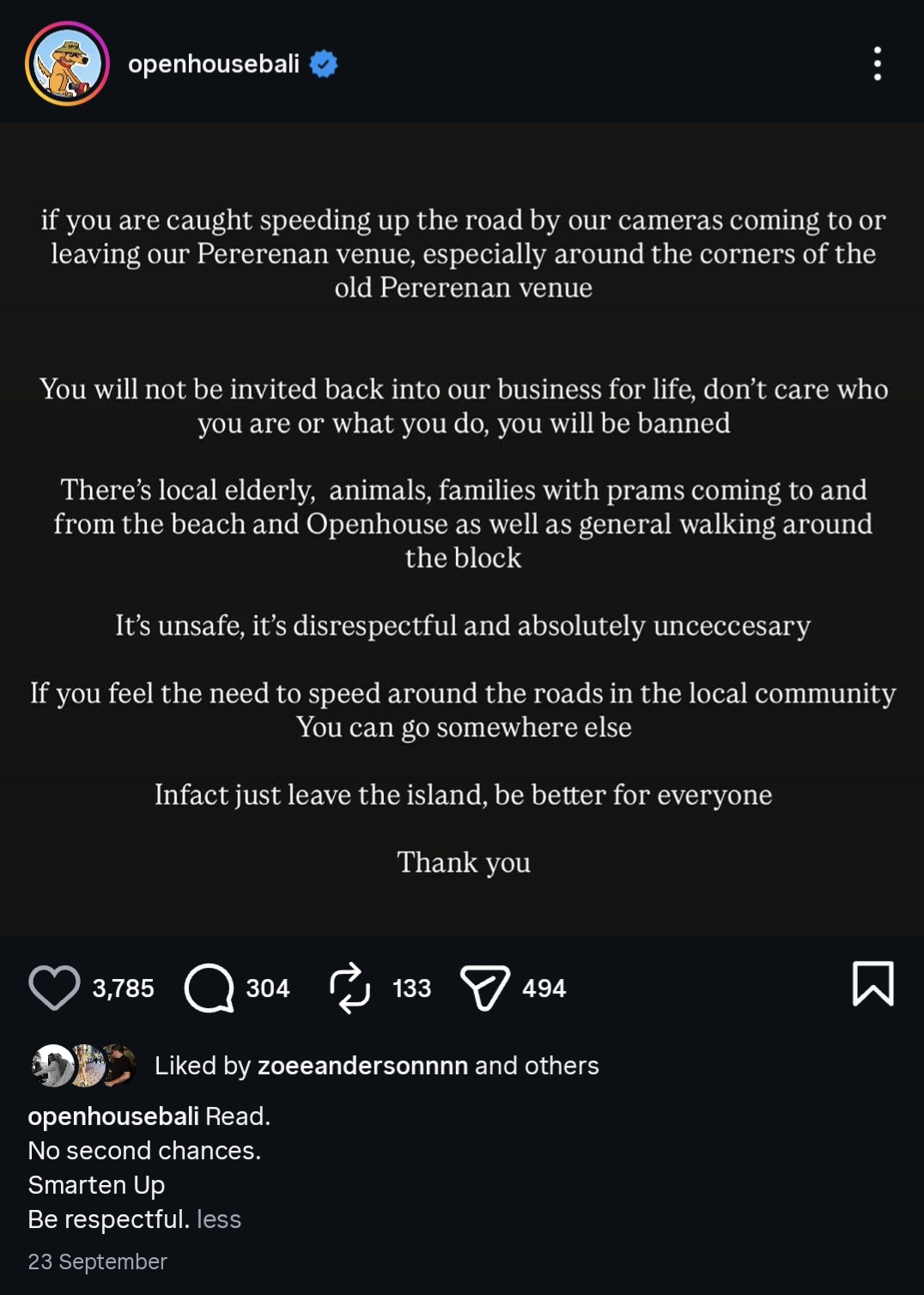
Open House Bali posted a message saying that anyone caught by its cameras speeding to or from the venue would be banned for life. Open House Bali
“No second chances.”
Then Della Terra followed.
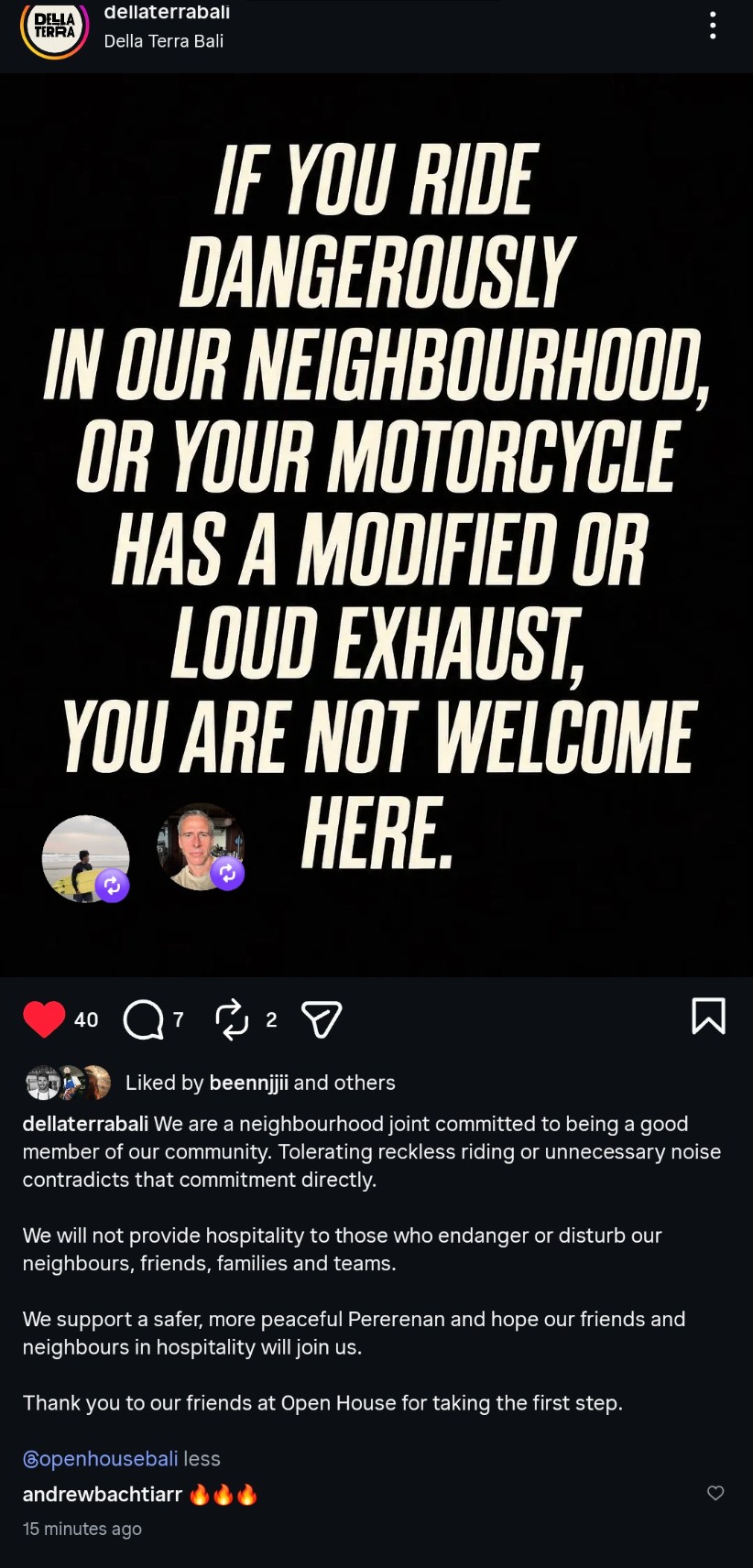
Its position was equally uncomplicated: ride dangerously in the neighbourhood, or arrive on a motorcycle with a modified or unnecessarily loud exhaust, and you are not welcome. Della Terra Bali
Good.
Not because restaurants should become traffic police. They shouldn’t.
But because hospitality businesses have considerably more influence over the culture of a neighbourhood than they sometimes realise.
And it is about time more of them used it.
THIS DIDN’T COME OUT OF NOWHERE
This is an issue I’ve been following closely and have been involved in through local community discussions and meetings around Pererenan.
But the most important development hasn’t come from another meeting or another group chat. It has come from hospitality businesses themselves deciding to act publicly.
Open House, Della Terra, Origen, 7.AM | 7.PM, Fuego and Sonny’s Deli have each used their own platforms to set a clear standard around dangerous riding, excessive speed and loud exhausts.
That deserves credit.
Hospitality helps shape the culture of a neighbourhood. These venues are showing that being part of a community can mean more than serving food and drinks. It can also mean standing up for the people who live, work and walk there.
There have been meetings, WhatsApp conversations, discussions between residents and businesses, conversations about policing, signage, speed limits, cameras, enforcement and practically every other solution people could think of.
Back in February, residents were already describing motorcycles so loud that conversations outside restaurants had to stop while they passed. In the same community discussion, one local business was reported as having seen three accidents outside in a single month, while residents debated lower speeds and safer conditions on the road towards the beach.
By March, people were again reporting motorcycles racing at night and saying the problem had noticeably escalated.
By July, the same frustration had spread through neighbouring community groups, with residents describing speeding and loud motorcycles as a daily occurrence across Pererenan, Seseh and Tumbak Bayuh. Businesses and residents were openly discussing coordinated enforcement and what consequences might actually change behaviour.
Then, in late September, the conversation exploded again.
One resident described a motorcycle repeatedly arriving near their home around 3am, revving loudly enough to wake the family.
Another wrote: “We are simply asking for our streets to be safe.”
Another described eating dinner with their family and repeatedly having to stop the conversation because of passing motorcycles.
The frustration wasn’t simply that they were noisy. It was: we have discussed this endlessly, so what actually changes it?
Updated 3 October 2026
UPDATE: THE LIST IS GROWING
When we first published this story, two Pererenan venues had publicly taken a position.
It didn’t stay at two for long.
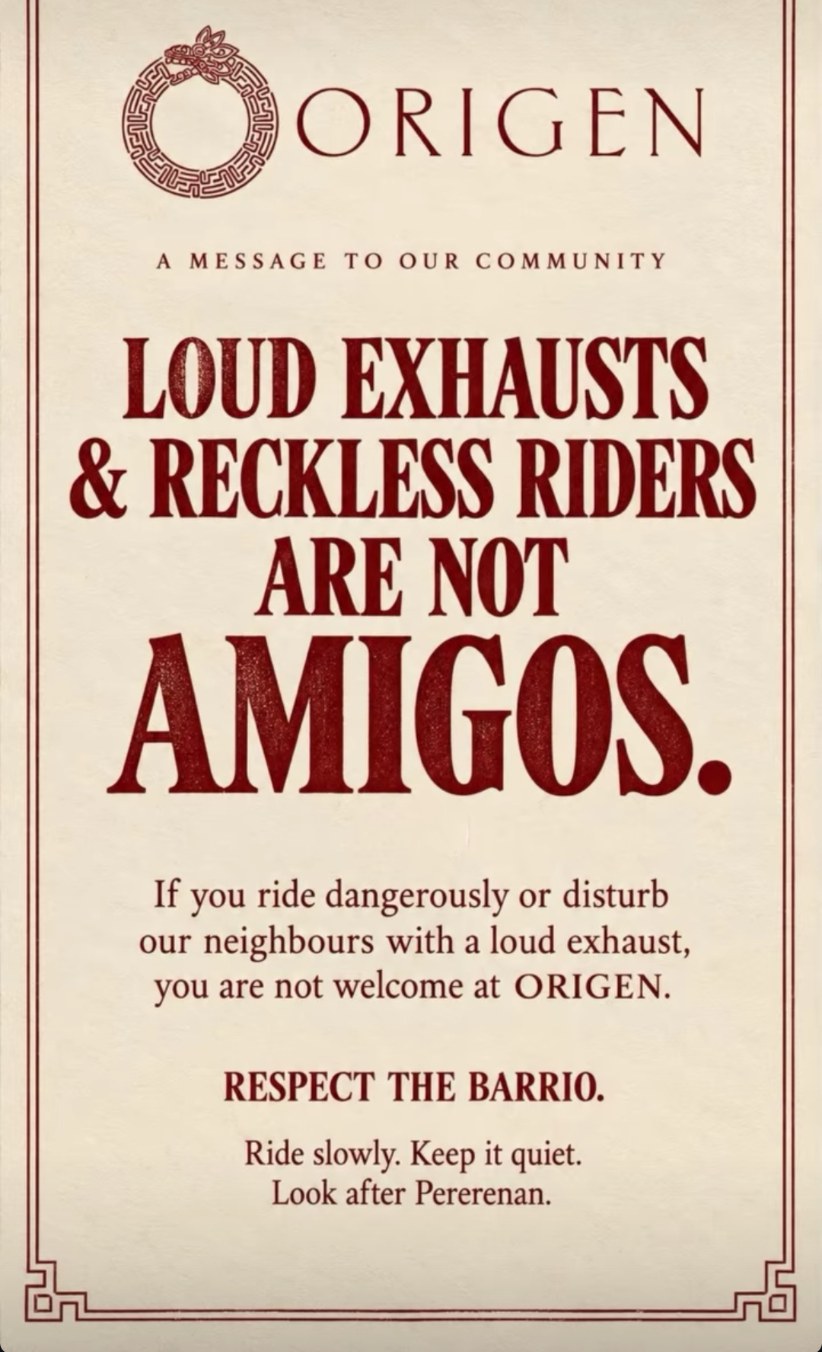
Origen Bali has now joined the movement, telling its community:
“Loud exhausts & reckless riders are not amigos.”
Their message is simple: if you ride dangerously or disturb the neighbourhood with a loud exhaust, you’re not welcome.
“Respect the barrio. Ride slowly. Keep it quiet. Look after Pererenan.”
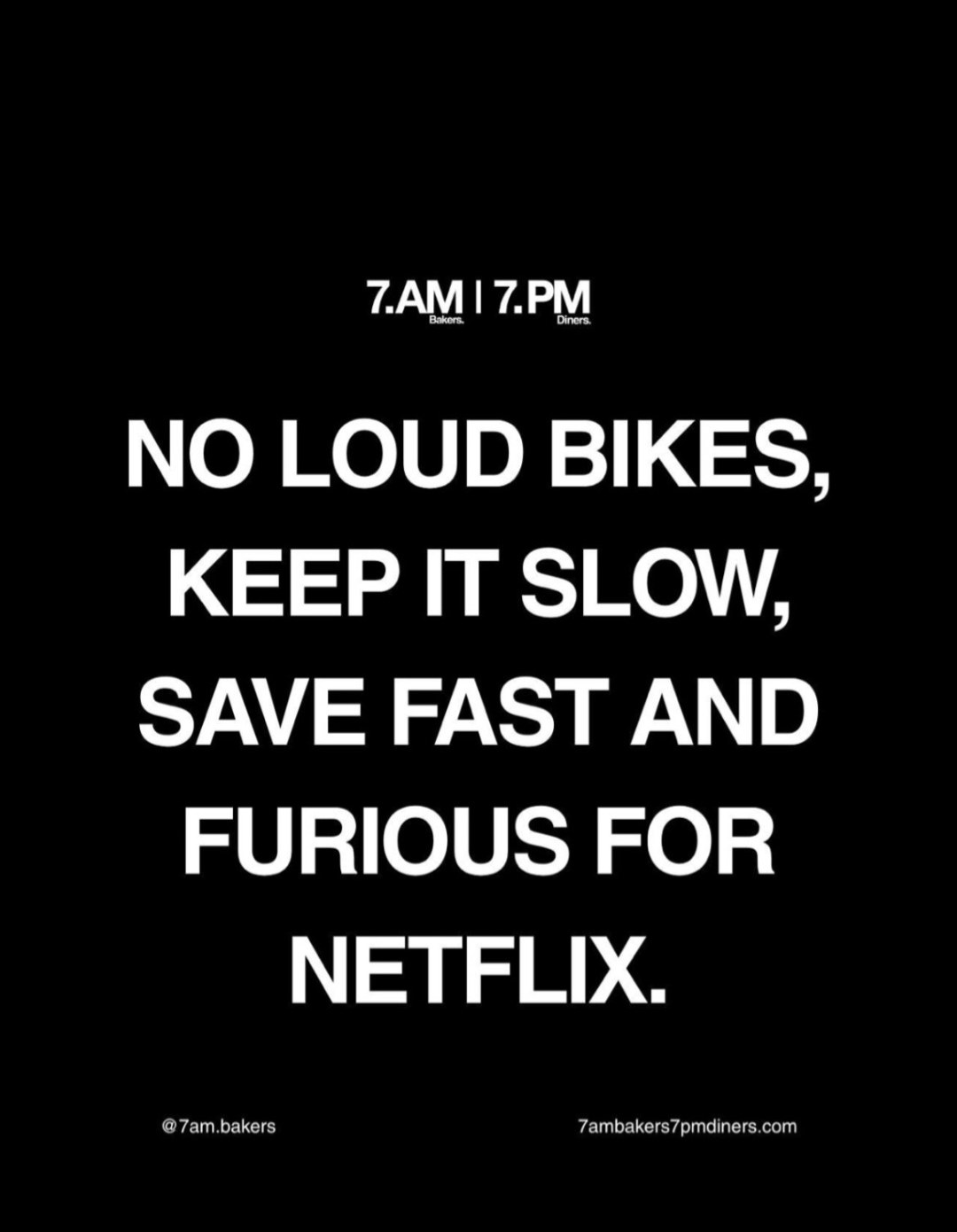
Then 7.AM | 7.PM joined in with an even shorter version:
“No loud bikes, keep it slow, save Fast and Furious for Netflix.”
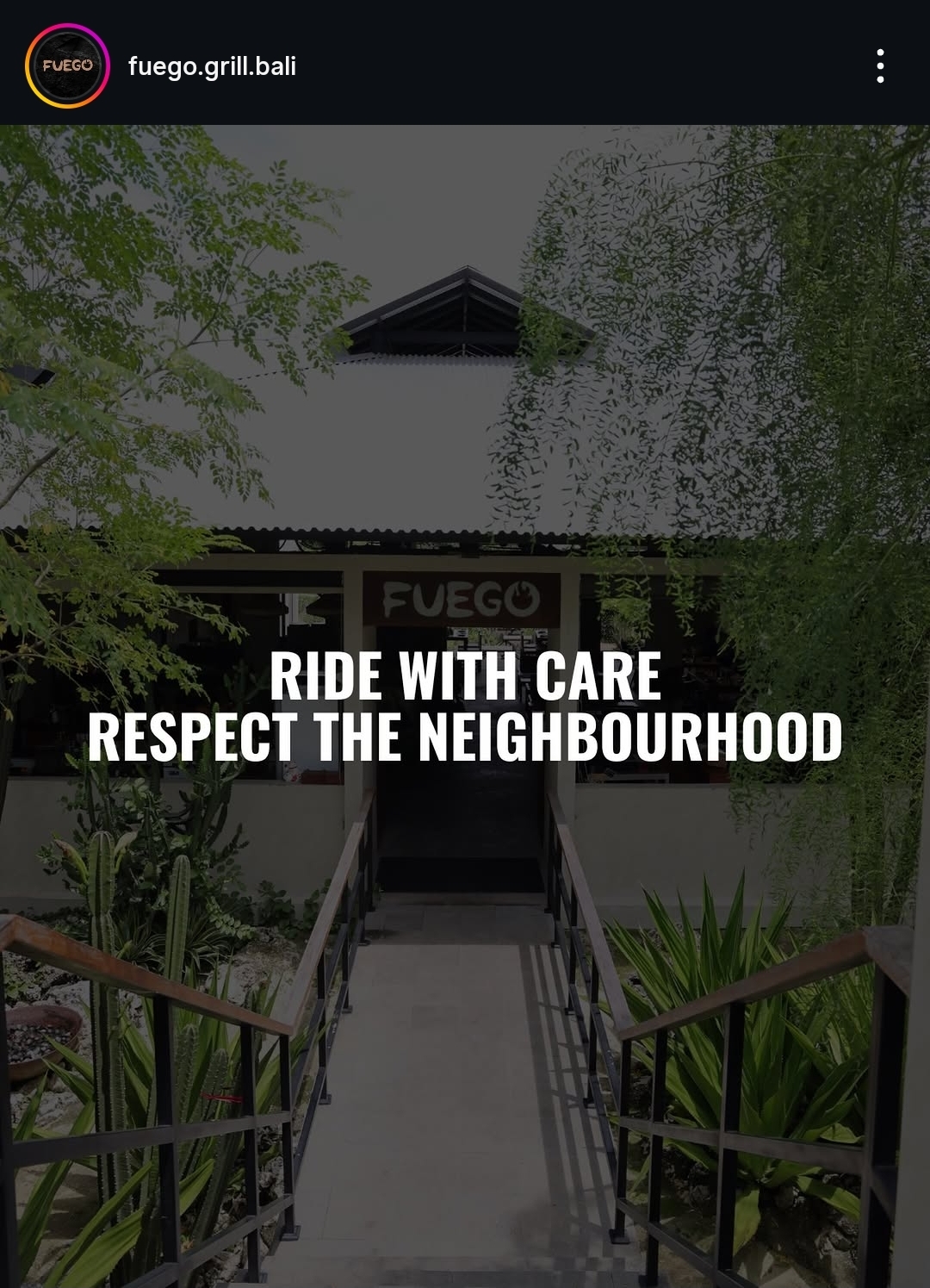
Fuego put it on a photo of its own front steps:
“Ride with care. Respect the neighbourhood.”
Sonny’s Deli has joined them too.
And this is where the story becomes more interesting.
It is no longer one venue making a statement.
It is no longer two.
We are now seeing individual hospitality businesses independently arrive at essentially the same position:
You are welcome in the neighbourhood. Reckless riding isn’t.
That matters.
Because cultural standards rarely change because somebody writes another angry message in a community group.
They change when enough people start saying the same thing.
And hospitality has a particularly powerful voice here because these are the businesses people are actually travelling to.
Having been part of some of the community conversations around this issue, it has been encouraging to see hospitality businesses take the lead publicly.
The aim was never for one person or one organisation to “own” the issue. The real progress comes when businesses across the neighbourhood independently decide that the same behaviour is no longer acceptable.
That is what is beginning to happen in Pererenan.
THIS ISN’T A WAR ON MOTORBIKES
Bali runs on motorcycles.
They’re how millions of people get to work. They’re how restaurant teams get home after closing. They’re how ingredients, parcels, nasi bungkus and approximately half the island seem to move around every day.
Nobody sensible is suggesting motorcycles are the problem.
Neither is enjoying a powerful bike.
The issue is behaviour.
If you’re doing excessive speed through a densely populated neighbourhood, blasting a modified exhaust at midnight or treating a road lined with homes and restaurants like your personal circuit, the problem isn’t motorcycle culture.
It’s you.
And there is a legal point underneath all of this too. In September 2026, Denpasar Police reported securing 78 motorcycles fitted with non-standard exhaust systems after public complaints about noise and road safety. Source: ANTARA.
Bali Police guidance has also reiterated that non-standard exhausts can be penalised under Article 285(1) of Indonesia’s Road Traffic and Transportation Law, including a potential fine of up to Rp250,000. Source: Tribratanews Polda Bali.
So Open House and Della Terra aren’t inventing some imaginary neighbourhood etiquette rule.
They are saying: our businesses don’t want to reward behaviour that is already making the place around us worse.
THE SAFETY PART ISN’T HYPOTHETICAL EITHER
We should be careful here, because not every traffic accident in Canggu or Pererenan has anything to do with the riders people are complaining about.
But anyone pretending road safety is an abstract discussion hasn’t been paying attention.
In early February 2026, a motorcycle rider died and his passenger was seriously injured after a collision on the Canggu–Pererenan road in Banjar Tiying Tutul. Police reporting cited by local media said the rider had attempted to overtake before encountering an oncoming vehicle. Source: Menitini.
In January 2025, a 25-year-old French tourist was killed in a hit-and-run on Jalan Raya Canggu, just east of the Canggu–Pererenan border, after police said his motorcycle was struck from behind. Source: detikBali.
Those incidents should not be falsely attributed to modified exhausts or to the specific riders currently upsetting residents.
They do, however, underline something obvious: these are real roads, with real consequences.
Not a racetrack.
Not content.
Not somewhere to demonstrate how quickly your rented bike can reach the next traffic jam.
HOSPITALITY HAS MORE POWER THAN IT THINKS
This is where Open House’s move becomes interesting.
For years, the standard response from hospitality businesses to neighbourhood problems has usually been something resembling: not our problem once they leave the venue.
Legally, that may often be true.
Culturally, it’s a cop-out.
Restaurants, bars, gyms, beach clubs and cafes help create demand. We attract people into neighbourhoods. We market those neighbourhoods. We benefit when they become desirable places to spend time.
There has to be some responsibility attached to that.
Open House essentially said: if you’re endangering the people around us while coming to enjoy our business, we don’t want your money.
Della Terra then backed it.
That is meaningful precisely because it costs something.
A venue putting up a “please respect our neighbours” sign is nice.
A venue telling a paying customer they can’t come back is a position.
NOW MAKE IT NORMAL
When we first wrote this, we asked what would happen if twenty venues adopted the same standard.
We’re not at twenty yet.
But we’ve gone from Open House, to Della Terra, to Origen, to 7.AM | 7.PM, to Fuego and Sonny’s Deli in a matter of days.
That is how a standard starts.
One business says it.
Another backs it.
Then another.
Eventually, arriving at a venue on a screaming modified bike and treating the street outside like a racetrack stops looking cool and starts looking socially embarrassing.
Which, frankly, may be more effective than another sign telling somebody to slow down.
Dangerous riding to or from our venue? You’re out. Deliberately antisocial exhaust? Don’t park it here. Abuse the neighbourhood our business depends on? Spend your money somewhere else.
It doesn’t require every venue to investigate motorcycles or confront riders in the street.
It requires a shared expectation.
Rental businesses could be part of it. Hotels could put it into guest information. Gyms could tell members. Restaurants could put a discreet notice at the entrance. Venues with security could simply refuse entry where the behaviour is obvious.
More importantly, businesses could stand together rather than leaving individual residents to photograph plates, follow riders or put themselves in uncomfortable situations.
One recent community discussion captured that frustration perfectly: a mother questioned why ordinary residents should be expected to chase reckless riders or gather evidence themselves simply to get something done. The conversation then moved toward a coordinated initiative involving residents, businesses and the relevant authorities rather than individuals attempting to police the roads themselves.
That’s the right direction.
THIS IS WHAT BEING A NEIGHBOURHOOD BUSINESS ACTUALLY MEANS
Pererenan is changing ridiculously quickly.
More restaurants. More traffic. More visitors. More villas. More people who discovered the neighbourhood last Tuesday telling Instagram they’ve found a hidden gem.
Growth brings money.
It also brings responsibility.
A hospitality business can’t claim to be “community driven” because it hosts a Sunday market, puts local somewhere in its Instagram bio and knows the name of the guy selling coconuts outside.
Community becomes meaningful when standing up for it is slightly inconvenient.
That’s why Open House deserves credit for drawing the line publicly, Della Terra for immediately backing it, and Origen, 7.AM | 7.PM, Fuego and Sonny’s Deli for helping turn the message into something bigger than any single venue.
Now we’d like to see more.
Not a crusade against tourists. Not expats versus locals. Not motorcycles versus pedestrians.
Just an incredibly basic proposition:
If you’re going to enjoy a neighbourhood, don’t make that neighbourhood worse for everyone else.
And if hospitality helped invite you there, hospitality is perfectly entitled to show you the door.
SUPPER SOCIAL’S POSITION
We’d like to hear from Bali hospitality businesses willing to adopt the same approach.
If your restaurant, bar, hotel, cafe, gym or venue is prepared to refuse service to people demonstrably riding dangerously through its surrounding community, and to discourage unnecessarily loud modified motorcycles, tell us.
We’ll share the businesses standing behind it.
Six venues making a stand is no longer a coincidence.
Twenty venues doing it becomes a standard.