At burnt, Everything Starts With Fire

Ulu Cliffhouse has never struggled for reasons to visit. There is the pool, the cliff, the Indian Ocean stretching out below it and a sunset that has been doing most of the marketing for years. burnt, though, is an attempt to give people another reason to come back: dinner.
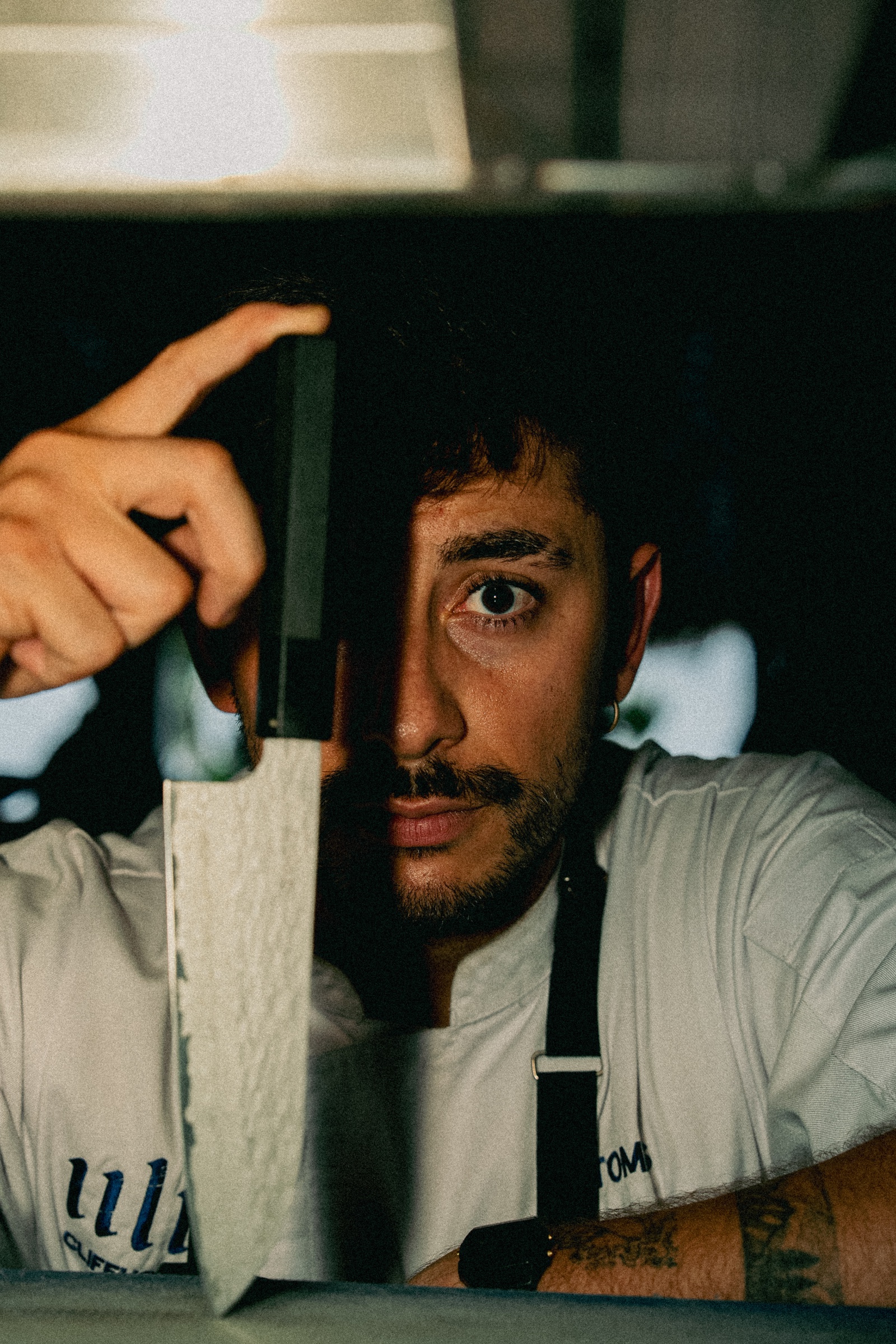
The restaurant sits within the wider Ulu Cliffhouse complex, but Chef Tomás is clear that it was never intended to feel like another part of the beach club. His aim was to create something more intimate and food-led, where the kitchen would become part of the room rather than something hidden behind it.
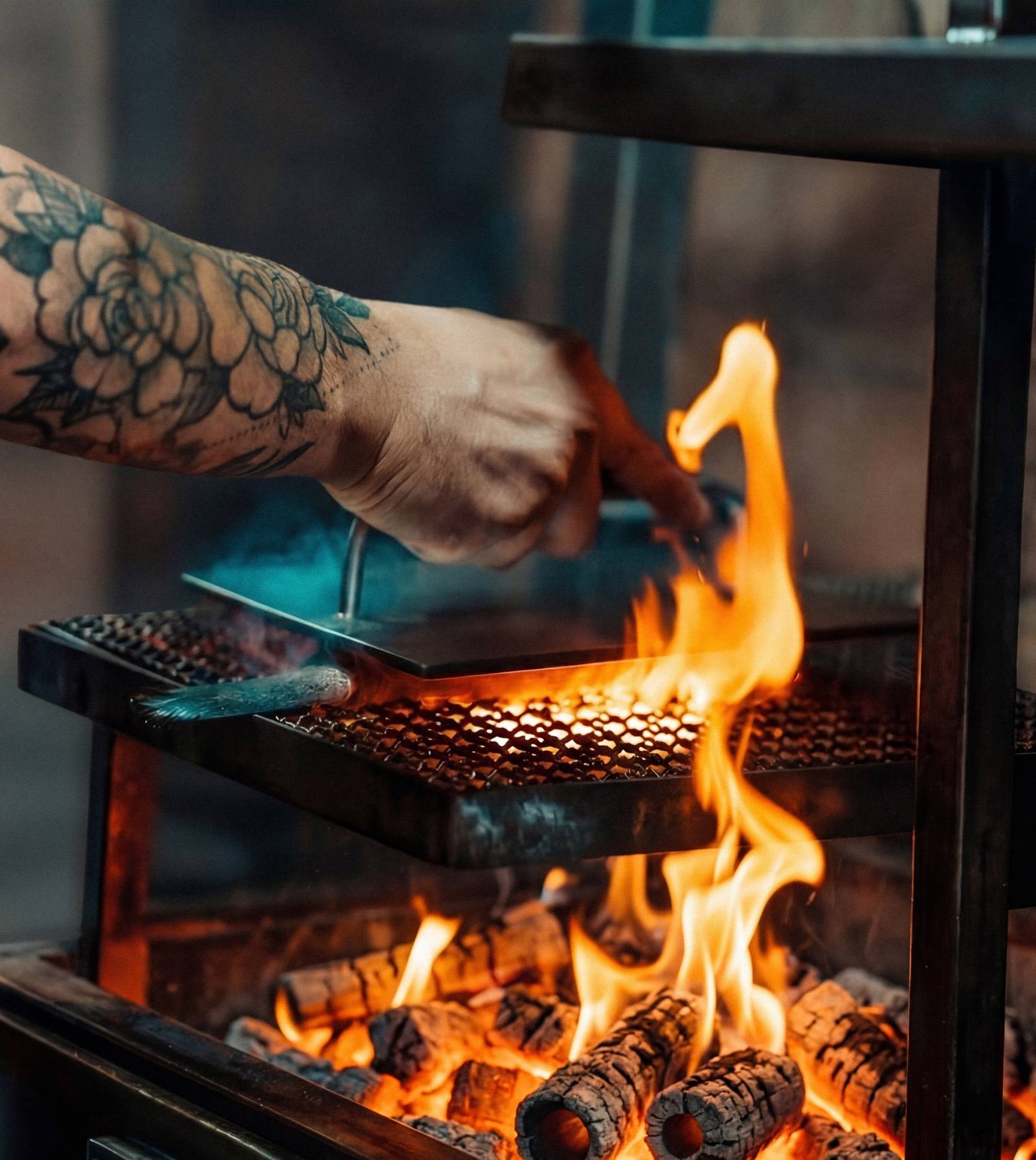
At the centre of burnt is an open fire kitchen powered by wood and charcoal. There is a high-temperature oven, a dedicated hearth, a custom grill and two planchas, all fed throughout service by live embers that the chefs move by hand. Coffee wood and rambutan wood are burned for both heat and flavour, and there is no neat dial allowing the cooks to correct a mistake with a quick turn of the wrist.
For Tomás, that unpredictability is exactly the attraction. Growing up in Chile, fire was less a culinary technique than a part of family life. Gathering around it was ritual: lighting it, waiting for it to settle, cooking slowly and staying close enough to understand what it was doing. He describes fire as something embedded in the culture he grew up with, and burnt is in many ways an extension of that memory.
“Fire is in our DNA.”
Cooking this way looks romantic from the dining room. In the kitchen, it is less forgiving. Temperatures change constantly, embers move, wood burns at different speeds and a cook has to react to what is happening rather than what a piece of equipment tells them should be happening. Tomás says technique can be taught, but instinct takes longer.
“Fire is incredibly inviting, but it also commands respect. If you lose focus, it will take everything.”
That tension runs through the whole restaurant. burnt feels controlled, but the thing powering it never entirely is.
A restaurant built around the kitchen
The open kitchen does much of the work in giving burnt its own identity. Rather than separating the chefs from the room, the layout puts them directly in front of diners. Flames rise behind the counter, smoke and heat move through the space, and dishes are prepared close enough that guests can watch each stage of the process. Tomás can leave the pass, speak to a table and return to the kitchen without disappearing behind a wall.
It changes the relationship between kitchen and dining room in a way he likes.
“We want people to genuinely see, feel and connect with the energy of what is actually happening in the kitchen.”
There is theatre in that, obviously, but it does not feel designed purely for effect. The grill is there because the food depends on it. The flames are not decorative. When the kitchen is busy, you are watching people actively manage something unstable.
From the coast to the coals
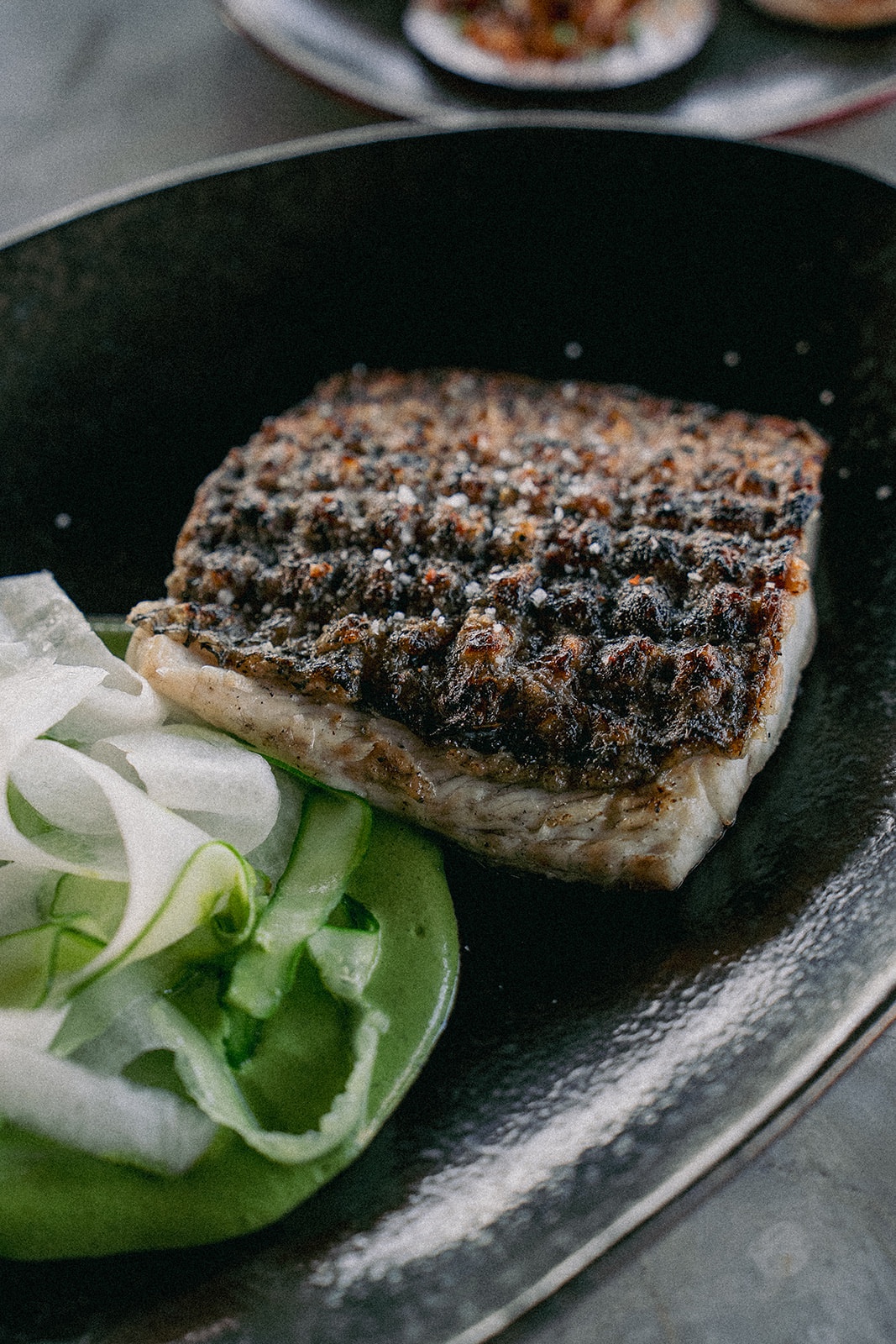
The menu is built heavily around seafood, which makes sense given the restaurant's position above the ocean, although the sourcing stretches far beyond Bali.
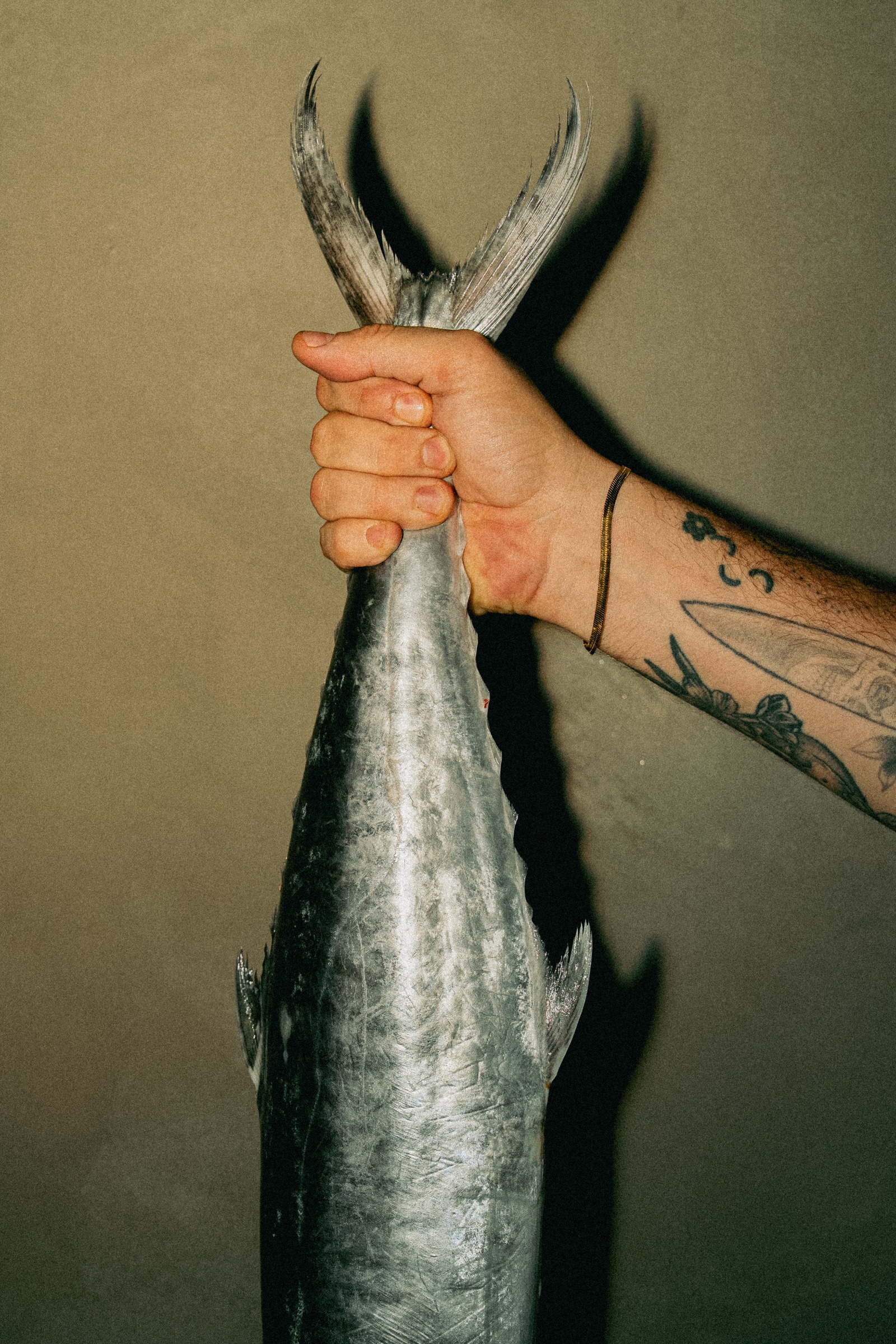
Oysters currently arrive from Java and Lombok. Octopus comes from Java or Sumbawa, while the daily catch is sourced from the coastlines of Bali and Java. Deliveries come daily where possible and no fresh seafood is supposed to remain in the kitchen for longer than 48 hours.
Tomás is blunt about what happens when something does not meet the standard.
“I would much rather ‘86’ a dish for the night than serve something that compromises on quality.”
That approach sounds obvious until you consider the economics and expectations of a busy restaurant. Removing a dish from service is inconvenient. Sending produce back is inconvenient. The easier option is almost always to make do. burnt's position is that it would rather disappoint someone by saying no than disappoint them after saying yes.
The food itself rarely tries to hide what happened to it. The whole coral grouper is reverse-butterflied and cooked over the fire. Angus cuts are finished over embers and served with koji butter, beer mustard, leek escabeche and green peppercorn sauce. Smoke, char and heat appear throughout the menu, but Tomás is careful not to let fire become the entire personality of every plate.
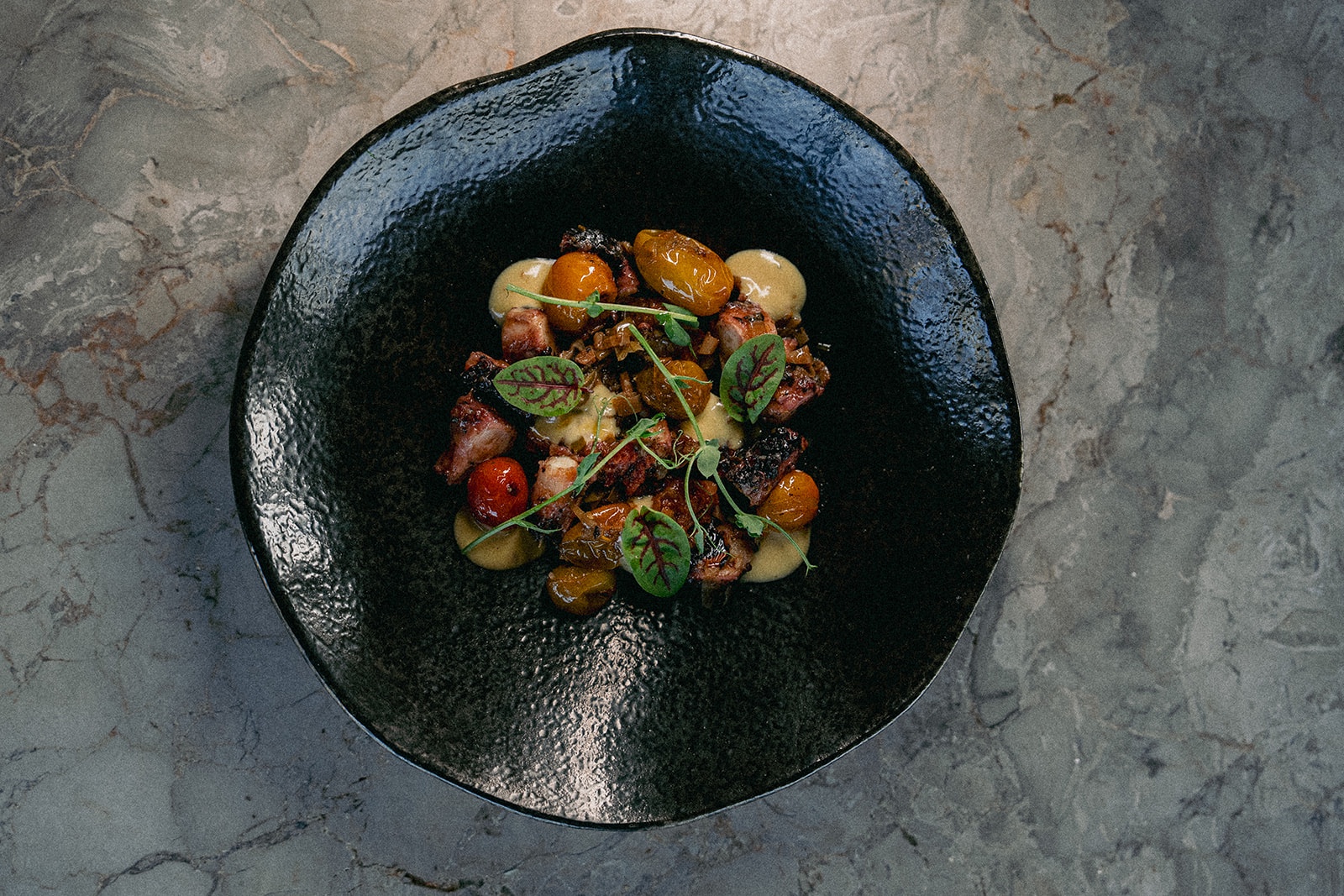
Interestingly, when asked what he would order himself, he talks about the cauliflower with the same enthusiasm as the beef. He likes the idea that vegetables can be treated with the same seriousness as expensive proteins, and that a properly cooked cauliflower should be able to hold the table in exactly the same way.
The dish he insists first-time visitors should not miss, however, is the octopus.
“The octopus is definitely a dish you simply cannot miss.”
burnt had only been open for around a month when we spoke, and Tomás was already talking about the menu as something unfinished. Not incomplete, but still moving. He is not interested in constant reinvention for the sake of it. Instead, dishes are adjusted incrementally: a sauce becomes sharper, the cooking time changes, one element disappears, another becomes more prominent. The restaurant is young enough that those decisions are still happening in real time.
Not quite Mediterranean, not quite anything
Read through the menu and certain influences are obvious. Buñuelos, romesco, jerez and escabeche point towards Spain and the Mediterranean, while Tomás carries techniques and memories from Chile into the kitchen as well.
Then there is Indonesia.
Rather than trying to force those influences into a neat description, Tomás seems happier leaving the edges blurred. He is relatively new to Bali and speaks openly about still learning the ingredients, flavours and producers around him.
That restraint is refreshing. Bali has no shortage of menus described as some version of “Mediterranean inspired by local produce”, often before the connection has had time to become meaningful. Tomás appears more interested in allowing that relationship to develop gradually.
“I want to deeply immerse myself in the incredible bounty of flavours that Indonesia possesses.”
His longer-term ambition is to take the techniques accumulated through his career and his own cultural background, then reconstruct them through Indonesian ingredients rather than simply placing those ingredients inside a familiar format. The result, he hopes, will become increasingly difficult to categorise.
“Something without a strict label, and entirely without limits.”
The restaurant changes with the light
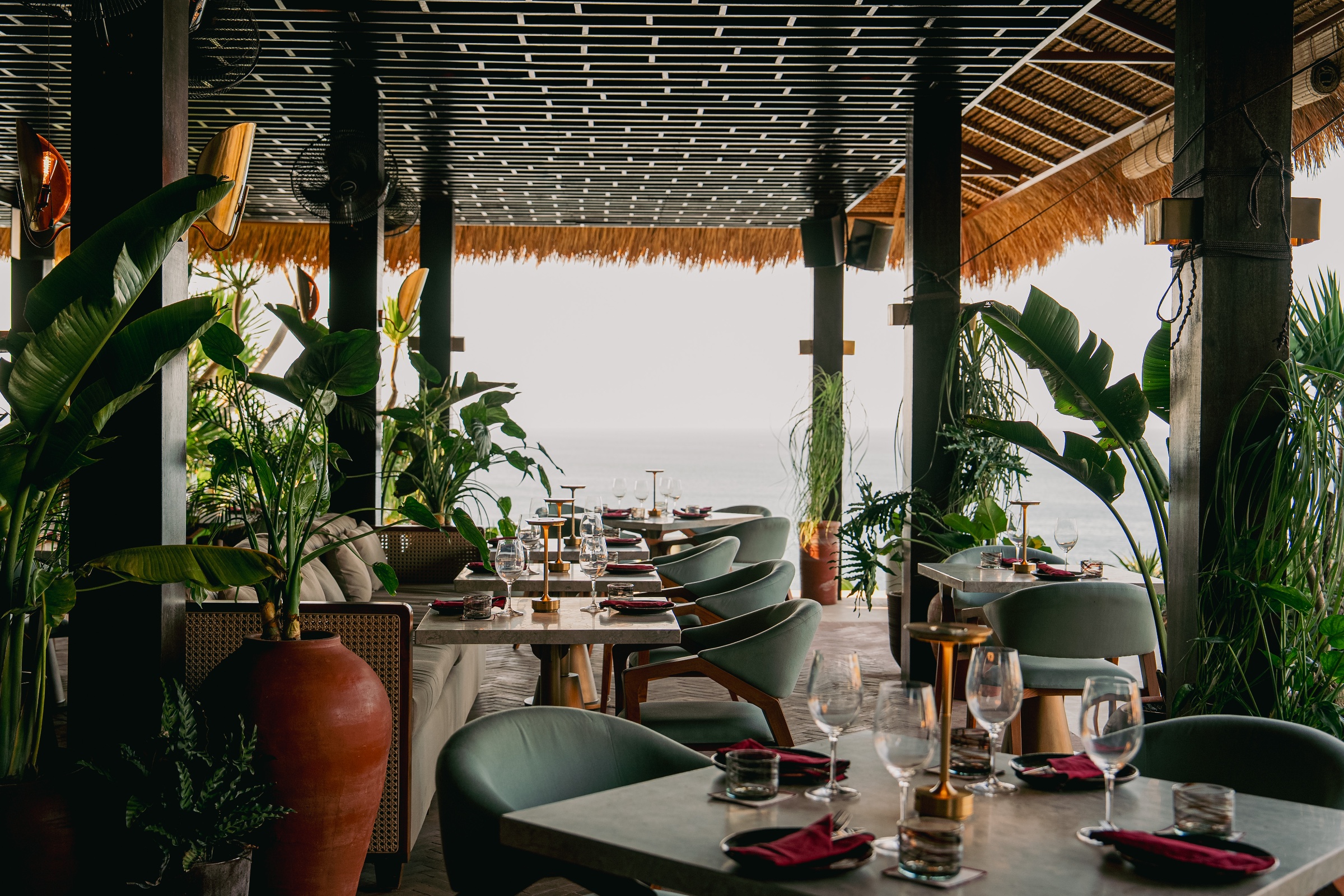
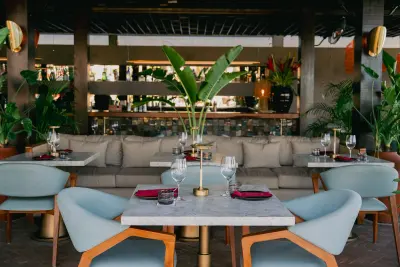
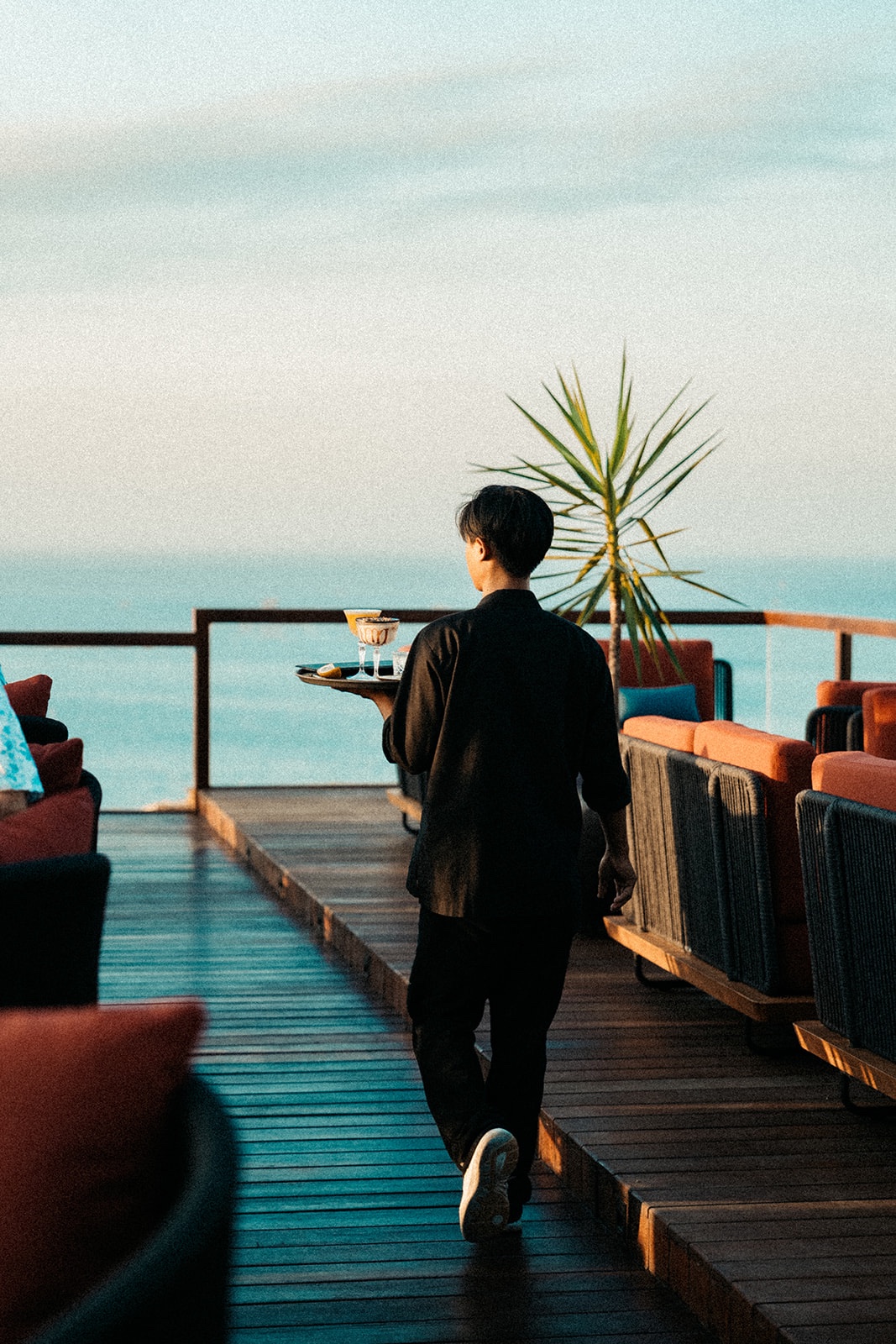
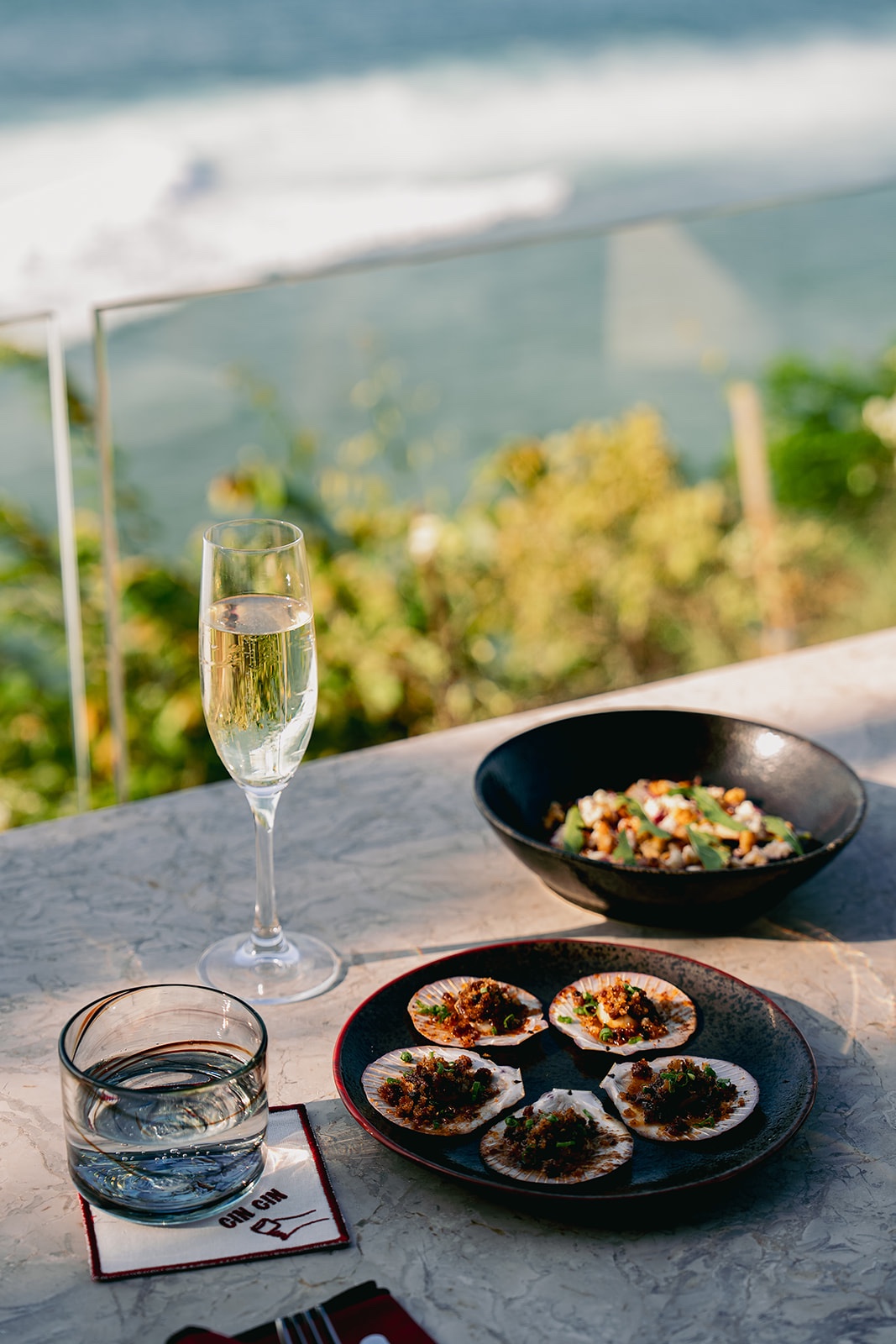
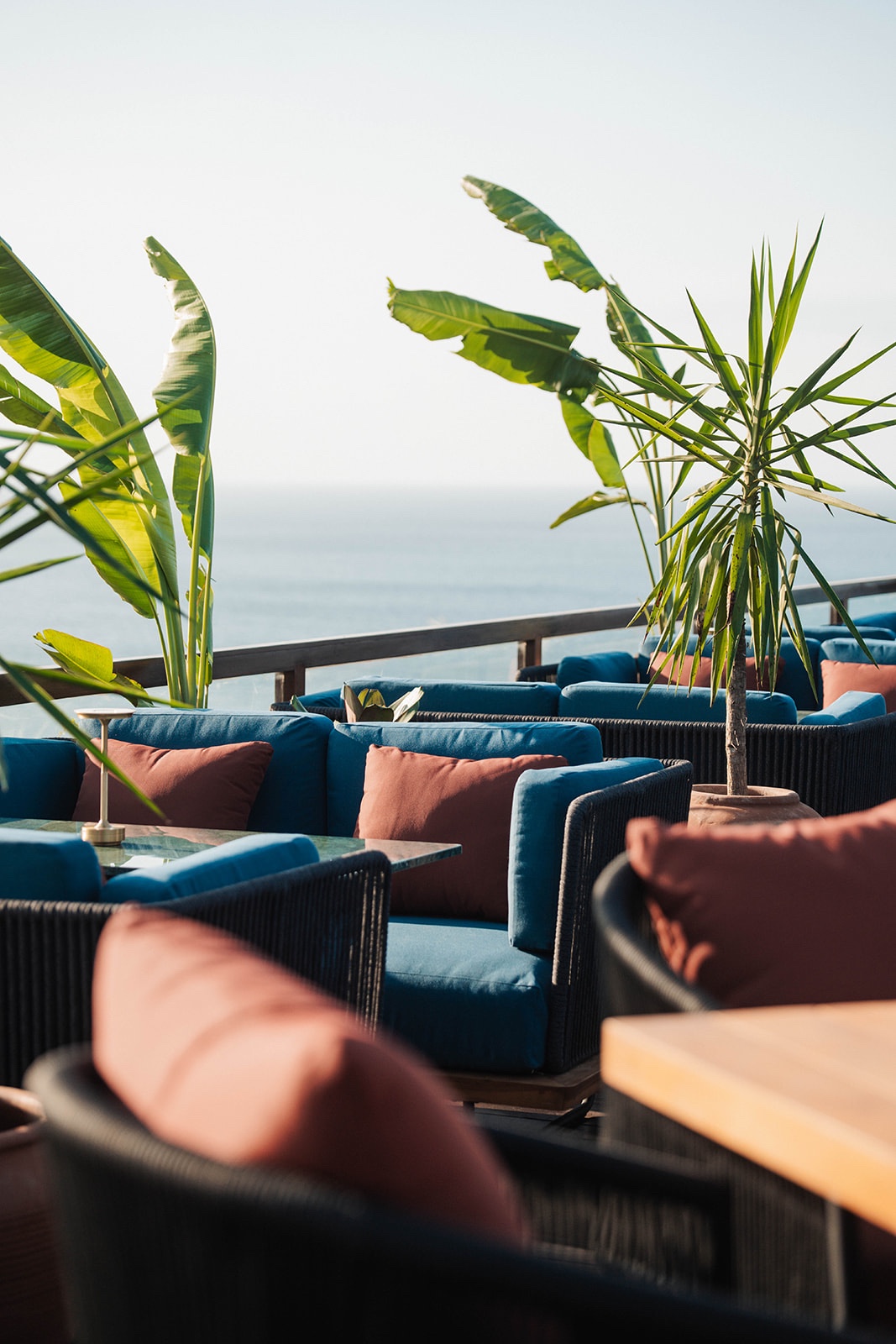
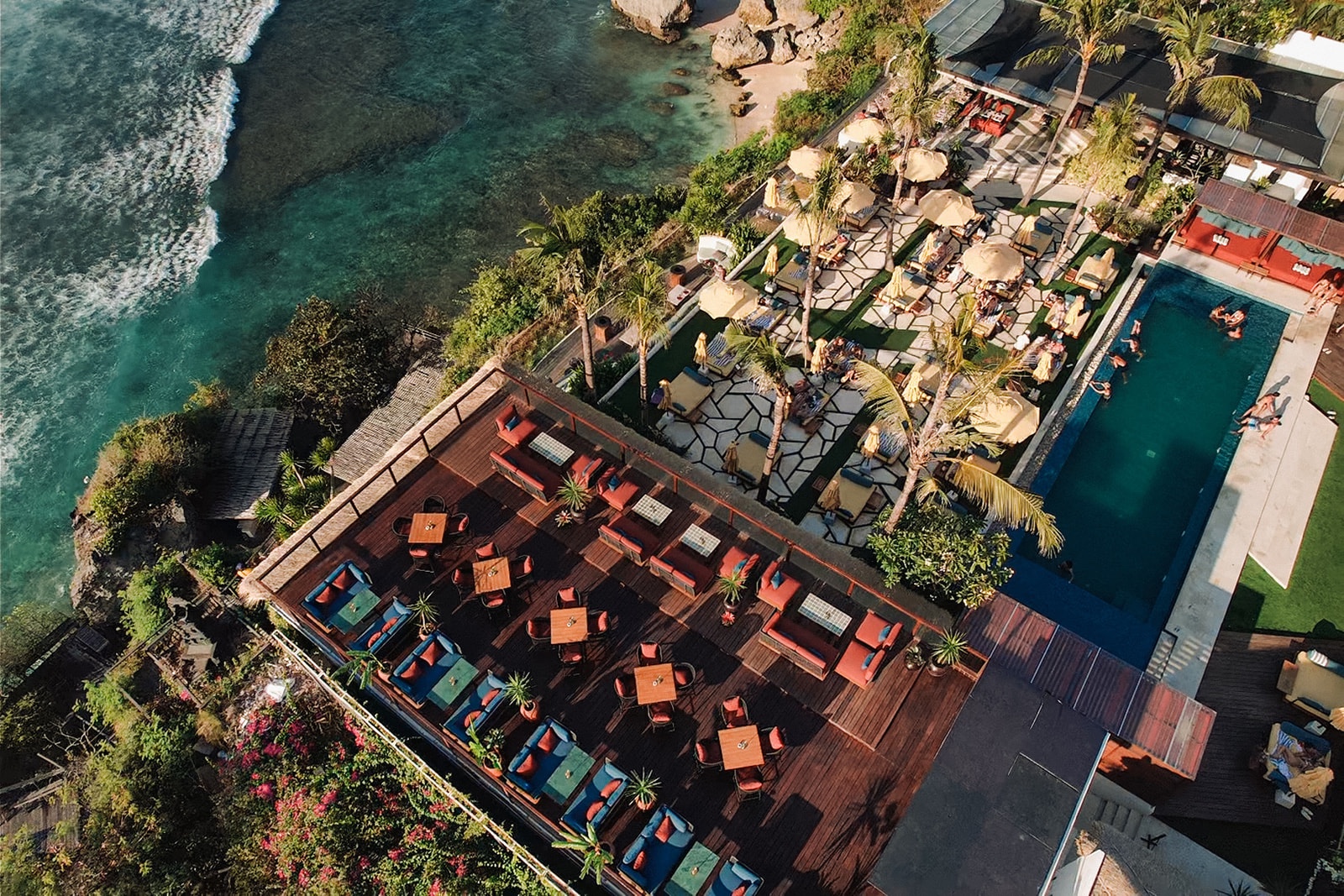
burnt has three distinct spaces: the Sunset Terrace, the main dining room and the Cliffside Lounge. The interesting part is that they make most sense at different stages of the evening.
At four in the afternoon, the terrace is the obvious place to be. The ocean is still bright, the room feels connected to the wider energy of Ulu Cliffhouse and people begin arriving for drinks as the sun moves lower.
Tomás recommends a 5:30pm booking for first-time visitors. It gives you enough time for oysters and cocktails before sunset, while still allowing dinner to unfold afterwards rather than feeling like two separate occasions.
By the time the sun disappears, the restaurant changes. The flames inside become more visible, the dining room feels warmer and more enclosed, and attention naturally shifts from the view towards the kitchen. Later, the Cliffside Lounge becomes the quieter option, with a limited number of tables facing the ocean and fire pits burning in the dark.
It is perhaps burnt's cleverest piece of design: the venue does not ask one room to work in the same way all night.
What to order
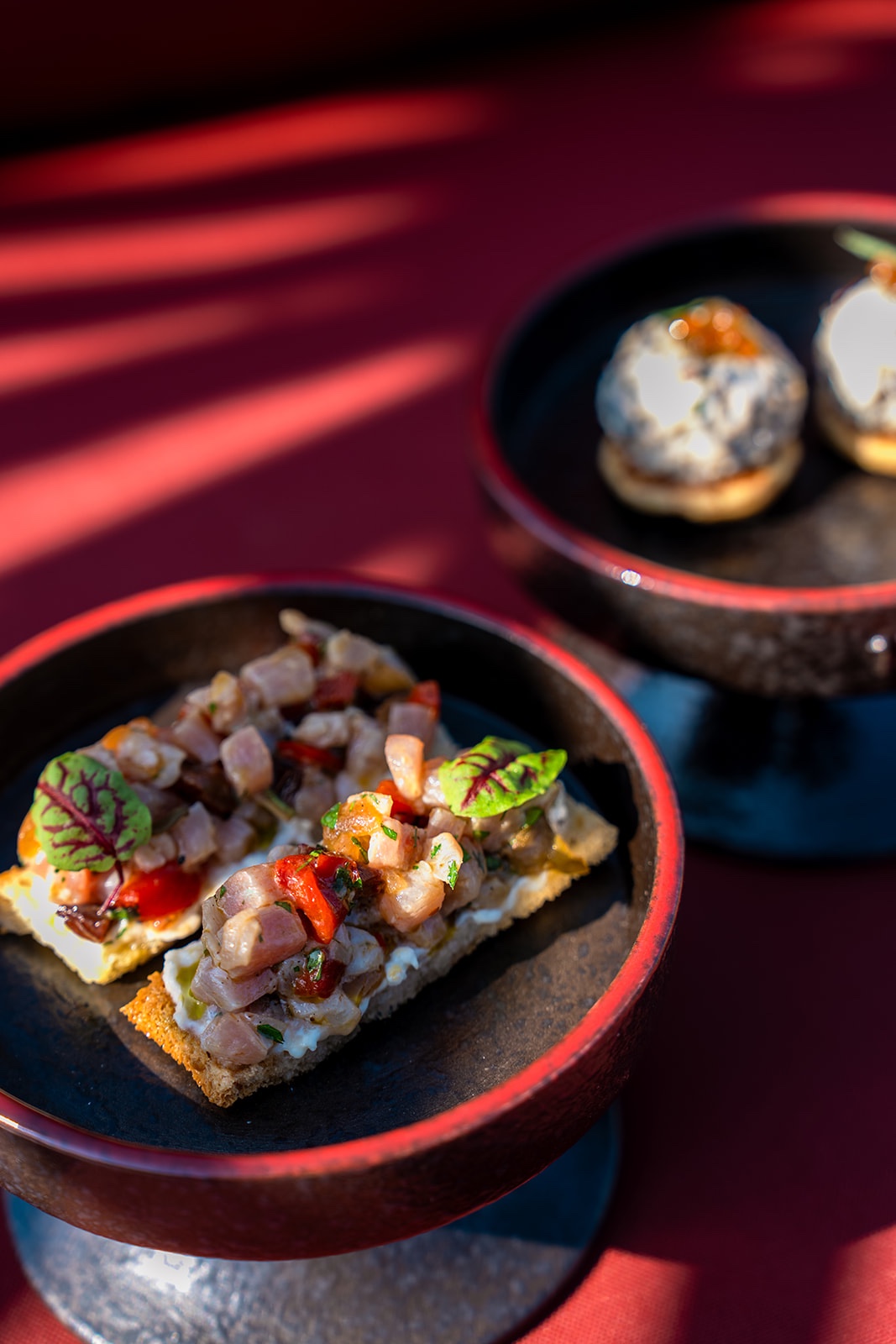
If two people are coming for the first time, Tomás would start them with fresh oysters, ox tongue croquettes and either the crab blinis or tartare crostini. From there, he suggests the octopus and crudo, or flatbread with the smoked fish dip, before moving onto larger plates.
For mains, the sea bass with goddess dressing and one of the steaks from the fire make sense together, with charred carrots and potato Parmentier on the side.
It is not a menu that particularly rewards everybody guarding their own plate. Sharing suits it better.
And while the sunset is part of the experience, arriving solely for the view misses the point of what burnt is trying to become. The more interesting part begins after the light is gone.
A full stomach, a happy heart
There is a Chilean saying Tomás returns to when describing what he ultimately wants guests to take away from the restaurant: a full stomach means a happy heart.
For someone running a kitchen built around custom grills, regional wood, live embers and carefully sourced seafood, his definition of success is notably uncomplicated. He wants people to eat well, feel properly looked after and come back. Then he wants to recognise them when they do.
That idea sits underneath almost everything at burnt. The fire might be the most visible part of the restaurant, but Tomás does not really talk about spectacle as the end goal. The point is familiarity. Connection. The sense that someone noticed you were there.
For all the smoke, flames and drama of the kitchen, what he is trying to build is something much simpler: a restaurant people want to return to.
Frequently asked questions
What is burnt at Ulu Cliffhouse?
burnt is a coastal fire dining restaurant inside Ulu Cliffhouse in Uluwatu. Its kitchen centres on cooking over wood, charcoal and live embers, with seafood, meat and vegetables designed largely for sharing.
Where is burnt?
burnt is inside Ulu Cliffhouse on Jl. Labuansait in Pecatu, Uluwatu, overlooking the Indian Ocean.
What time does burnt open?
burnt is currently open daily from 4pm to 11pm.
What time should I book burnt?
Chef Tomás recommends around 5:30pm for a first visit, leaving time for snacks and cocktails before sunset before moving into dinner.
What should I order at burnt?
Start with oysters and ox tongue croquettes, then add the octopus or crudo. For mains, share a wood-fired fish and one of the Angus cuts with charred carrots and potato Parmentier. Tomás also makes a strong case for the wood-fired cauliflower.
Is burnt the same restaurant as Ulu Cliffhouse?
No. burnt sits within the wider Ulu Cliffhouse destination but is its own restaurant concept, with a dedicated menu, open-fire kitchen, Sunset Terrace, Dining Room & Bar and Cliffside Lounge.
Is the food at burnt designed to share?
Yes. The menu works best with plates moving through the middle of the table rather than traditional individual courses.
Share this story