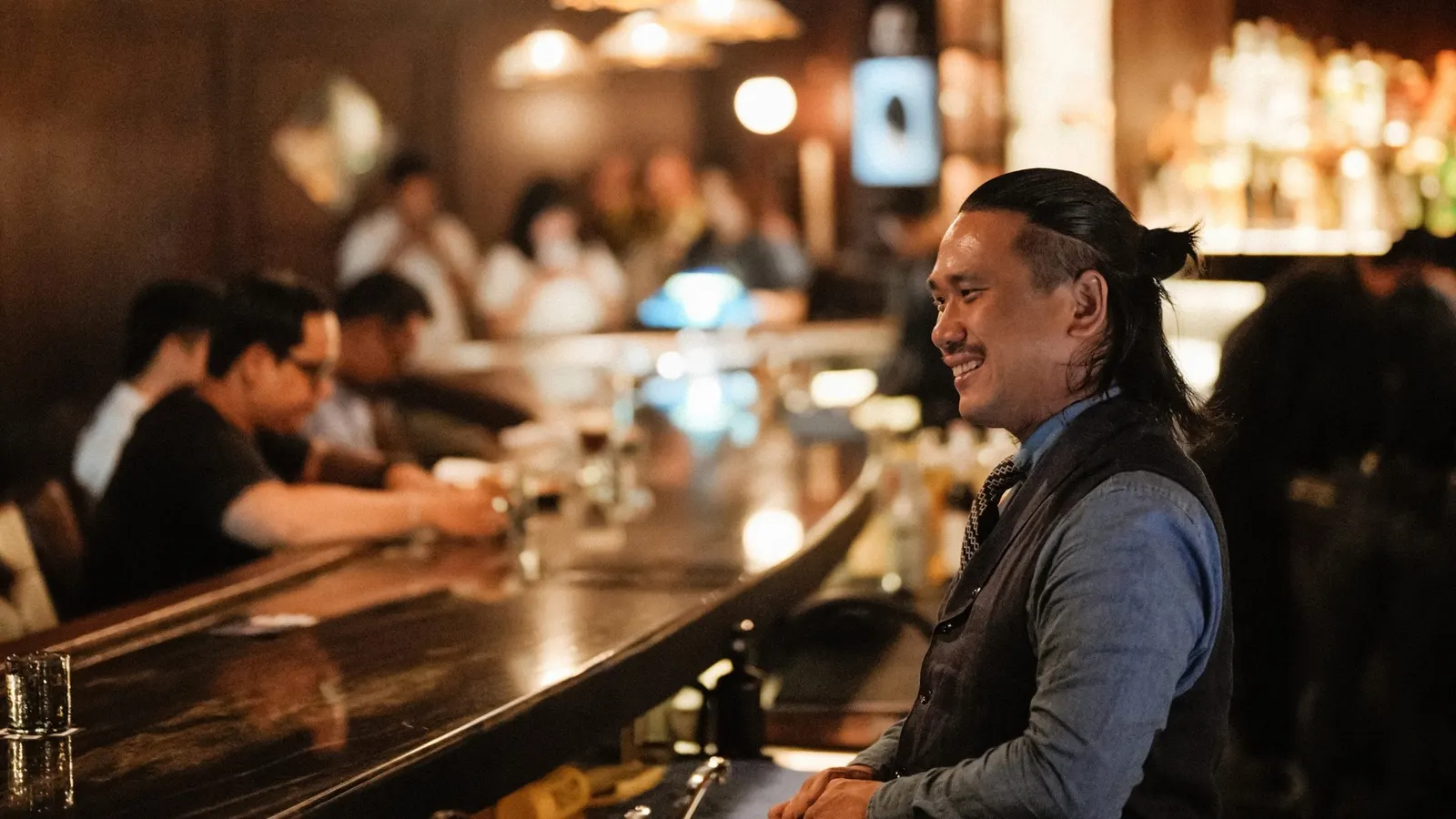
Photo: AOKU / Kaminari Group
At AOKU, matcha is blue and So What is the signature

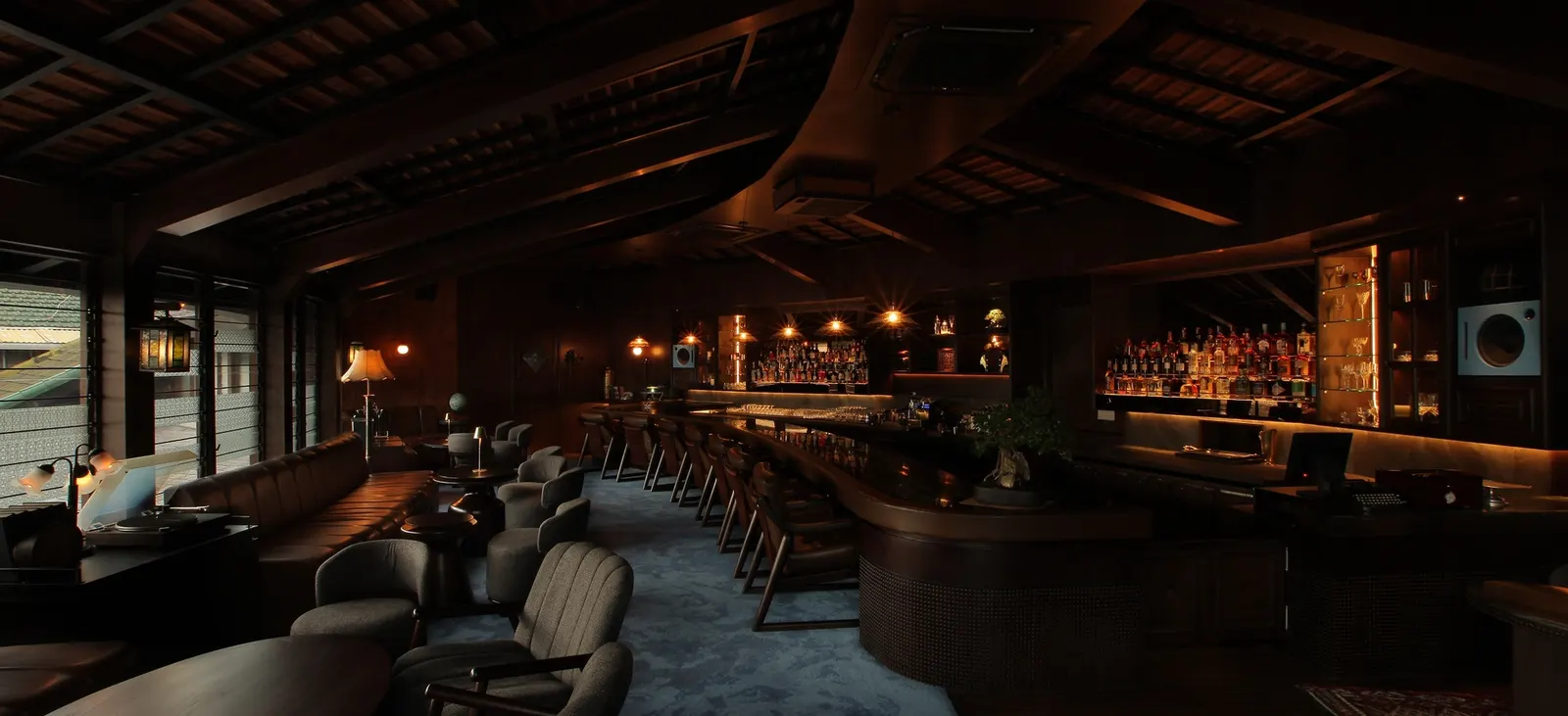
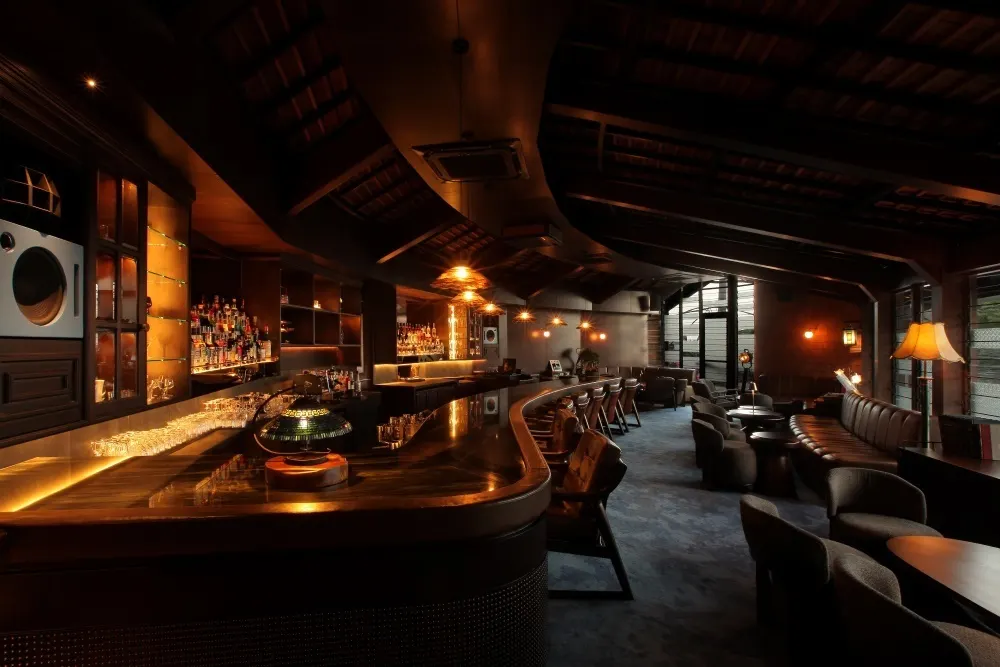
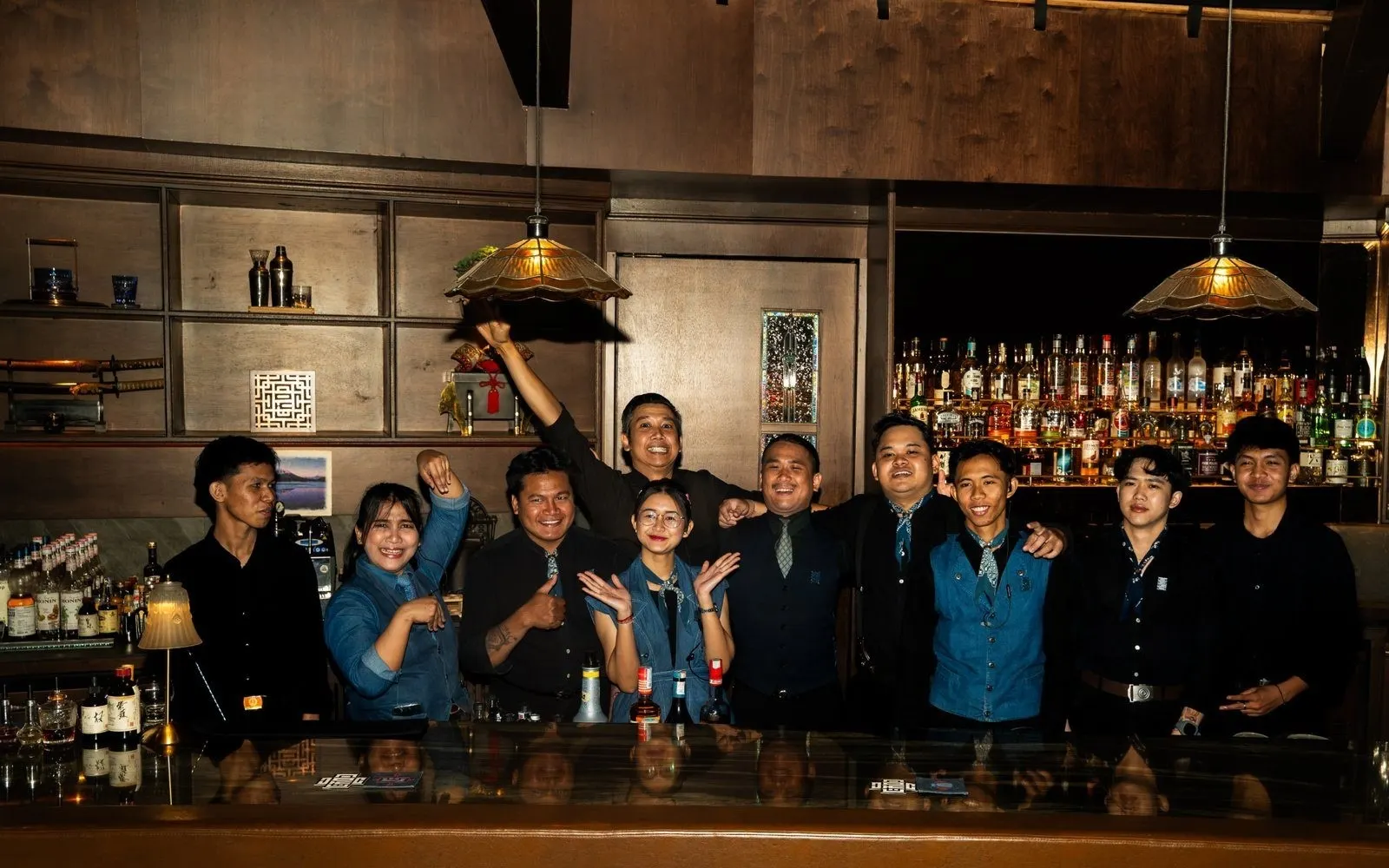
Downstairs, Jalan Petitenget is doing what Jalan Petitenget does after dark: scooters, horns, a beach club bass line somewhere in the distance. Upstairs from Dahana, behind a door you would walk past if nobody told you it was there, the volume drops. The bar curves through the room under fringed pendant lamps. The bottles are lit from behind. Somebody is stirring rather than shaking.
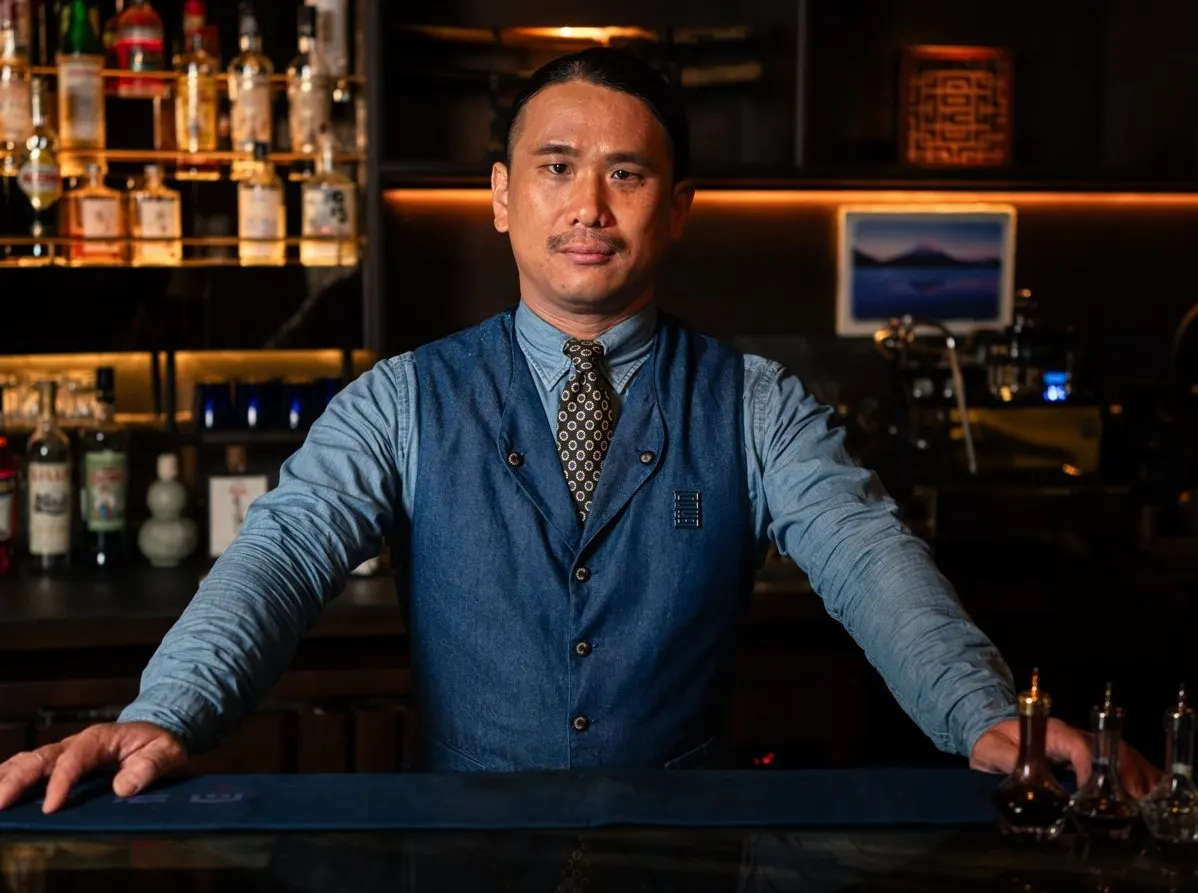
This is AOKU, the newest venue from the Kaminari group, which already runs Rayjin, Kajin and Dahana. Kensho Hirai, the bartender from Osaka behind it, worked in Tokyo, Singapore and Jakarta before Bali, and has been in Indonesia for six years so far. He is in a dark shirt and tie, and he is calm in the way good bartenders are calm, which is to say you suspect a lot is going on underneath.
That, it turns out, is the whole idea.
Two kinds of blue
Ao is Japanese for blue. For Kensho, the word carries two meanings, and the bar is built around both.
The first is jazz. Two of AOKU's signatures, So What and Kind of Blue, borrow their names from Miles Davis, and Kensho talks about the trumpeter as if he were describing his own job. Jazz players, he says, look cool on the outside and burn on the inside. So do bartenders.
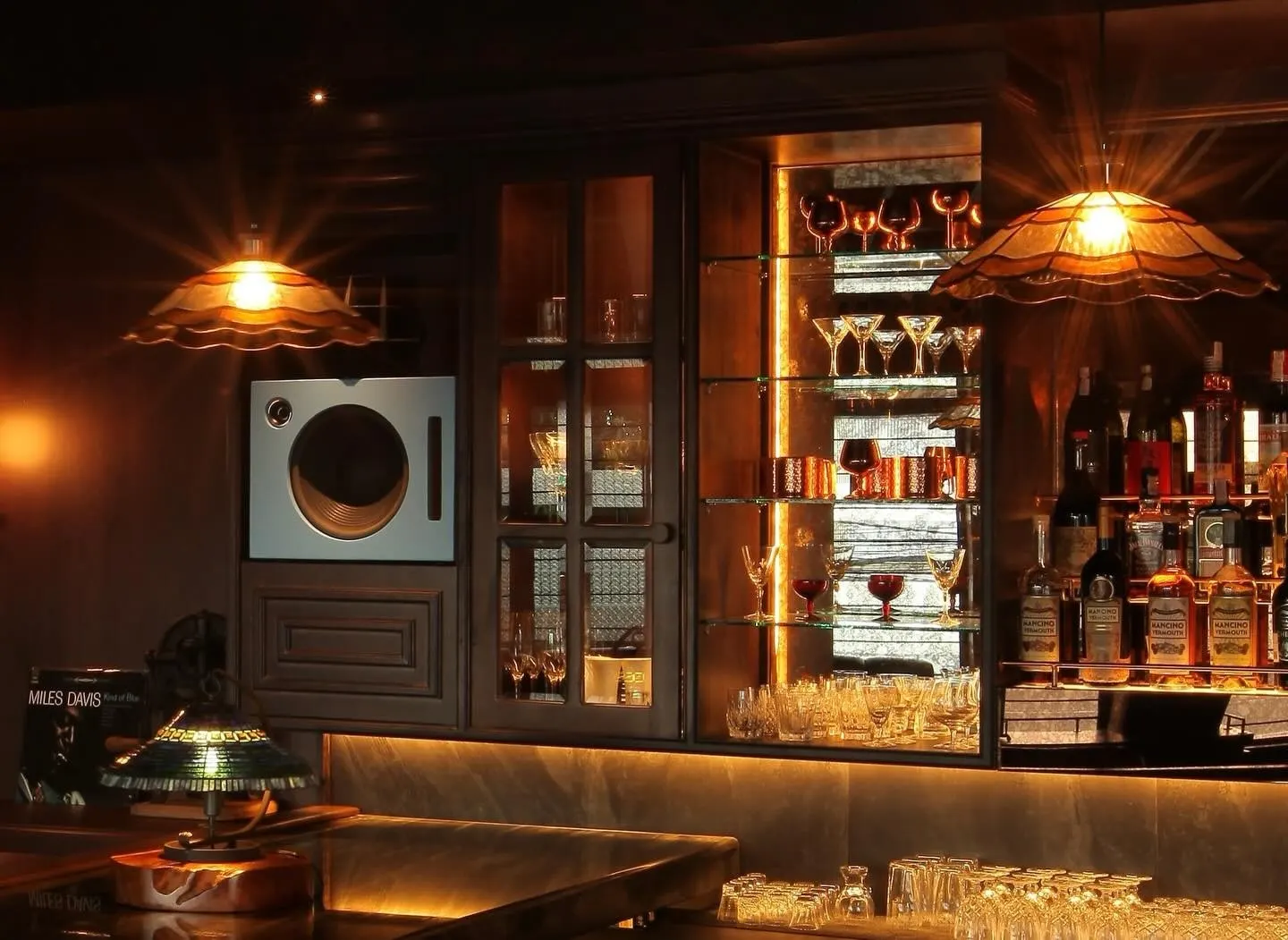
"Bartender also looks very cool, but inside is passion for hospitality."
He is careful about the other half of that equation. A bartender, in his view, does not get to be emotional at the bar, or the loudest laugh in the room. The passion is meant to go into the drink and the service, not into the performance. "I think jazz player and the bartender is the same," he says. "Because I like jazz."
The second meaning is nature. In Japanese, ao has long stretched to cover green as well as blue: leaves, mountains, new growth. Which is how a bright green drink ended up being called Kind of Blue, and how one of our crew ended up being corrected on camera.
"Oh my God, so matcha is blue," we say.
"Yeah, blue," says Kensho.
"Matcha is not blue."
He explains it again, patiently. In Japan, he says, people looking at good nature in the mountains would not call it green. They called it blue. "Oh, this is so beautiful blue."
"I learned something today," says a second voice from our crew.
Where Seminyak goes quiet
AOKU calls itself a Japanese speakeasy, and Kensho is precise about what that means. A speakeasy is hidden. It is upstairs, hard to find, not bright and not loud. The point of a speakeasy, as he puts it, is in the name: somewhere you can speak.
In his written answers to us, he describes the first ten seconds he is aiming for.
"When you come upstairs from Seminyak, I want you to immediately feel that the speed has changed."
The room does most of that work. The lighting stays low, the music is controlled, and the seating (leather booths, low armchairs, a long bar) gives people their own space. AOKU is for people who want to slow down a little, Kensho says, which in Seminyak on a Saturday night is a larger group than you might think.
Surprise me
The bar used to describe itself as bespoke before settling on speakeasy, and the bespoke part has not gone anywhere. Kensho describes the Japanese bespoke tradition as something close to omakase: you sit down and the drink is built around you. Sweet or refreshing, vodka or tequila, fruit or spice. "Everything we can make," he says.
In practice it starts with a conversation. What do you normally drink? Something strong, bitter, fruity or dry? He also watches how people are drinking and what mood they are in. From there he usually starts from the structure of a classic cocktail and builds something personal on top, with one small surprise.
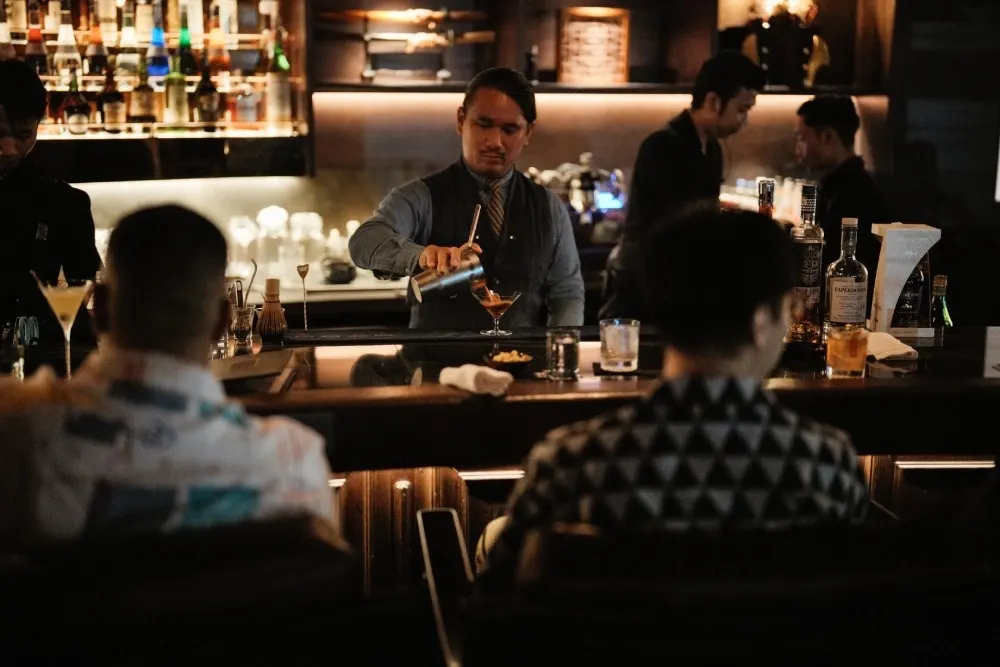
"It should still feel like your drink, not just my drink."
Ask him why any of this matters, when plenty of people in Bali drink to get drunk and leave it at that, and he does not argue with the shot. He likes a shot. But he sees alcohol as a special liquid, one that keeps memories. French and Italian houses have been making spirits for a century or two, and a 50-year-old bottle can still be opened and drunk, which is more than you can say for most ingredients. A single spirit, though, is a single taste.
"If cocktail is using one, two, three, four ingredients, just mix, after getting the new taste. That is for cocktail a very amazing point."
Our interviewer offers a translation: you can eat lettuce and you can eat beef, so why not make a hamburger? Kensho is delighted with this. "Bartender is almost chef," he says. "Same chef. I can make the new taste. This is my job."
Three signatures, three personalities
There are 18 signatures on the list right now, one of them in a Balinese style. We asked Kensho to talk us through three, and to describe each one as if it were a person.
So What
So What is AOKU's take on an Espresso Martini, built on Indonesian rum, coconut and Balinese coffee from Kintamani. Kensho says it is rare to find four Indonesian ingredients in one cocktail like this. The name is the personality. It is a very good drink, he says, and that is the end of the discussion.
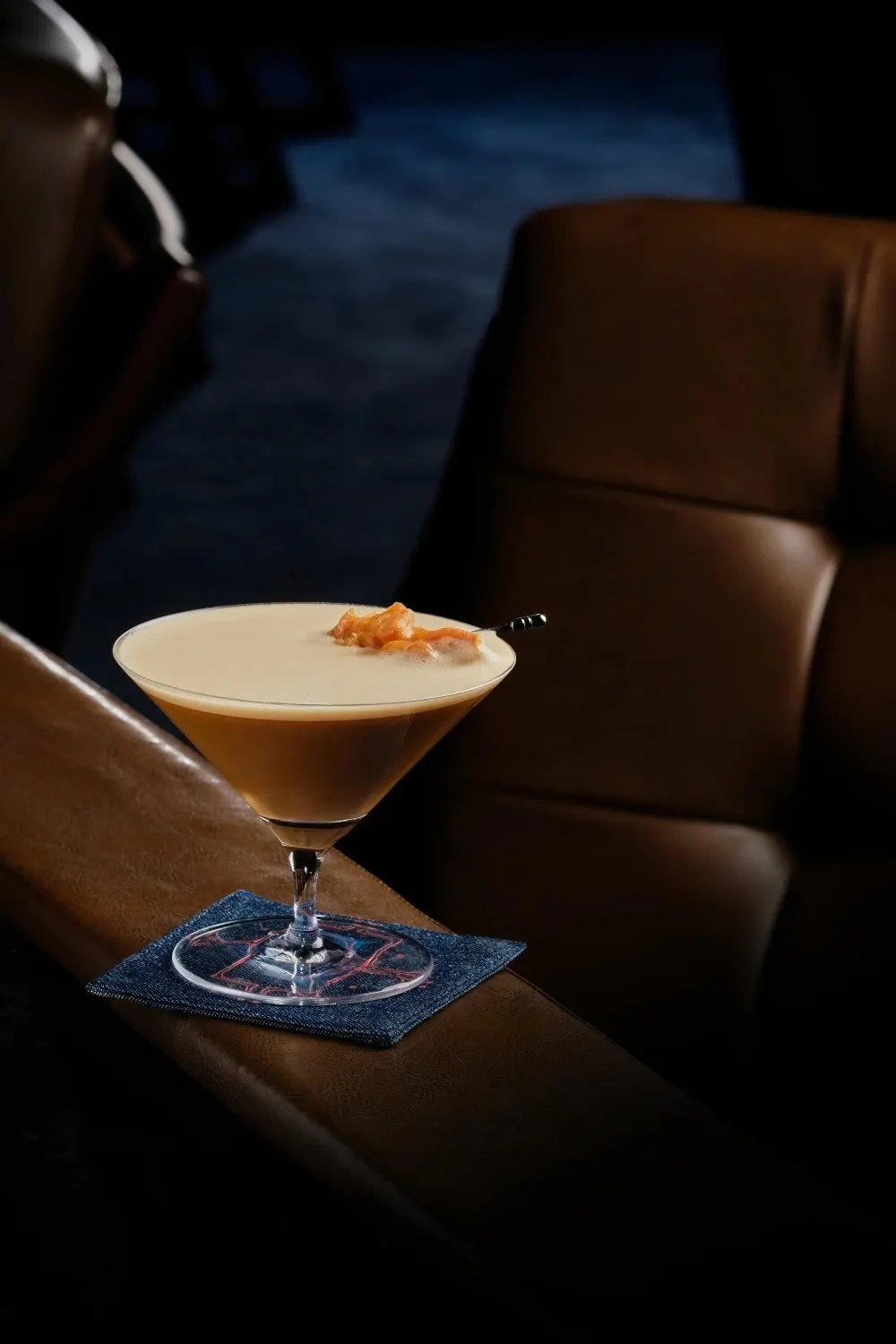
"I cannot say this is bad, this is good. Don't need to say anything, because so what?"
"Don't need too much," offers someone off camera. "Just a good Espresso Martini." Kensho agrees, several times.
Kind of Blue
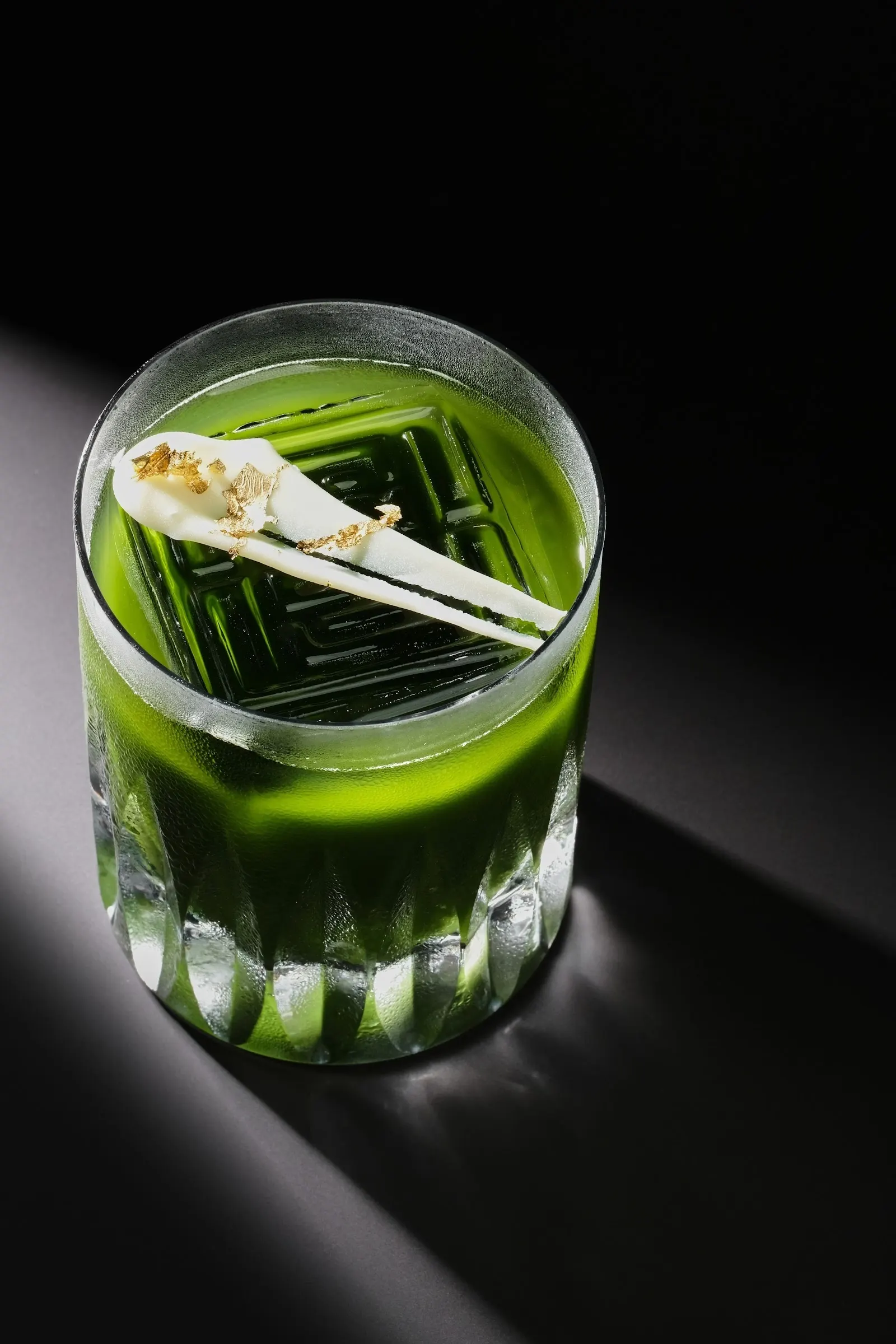
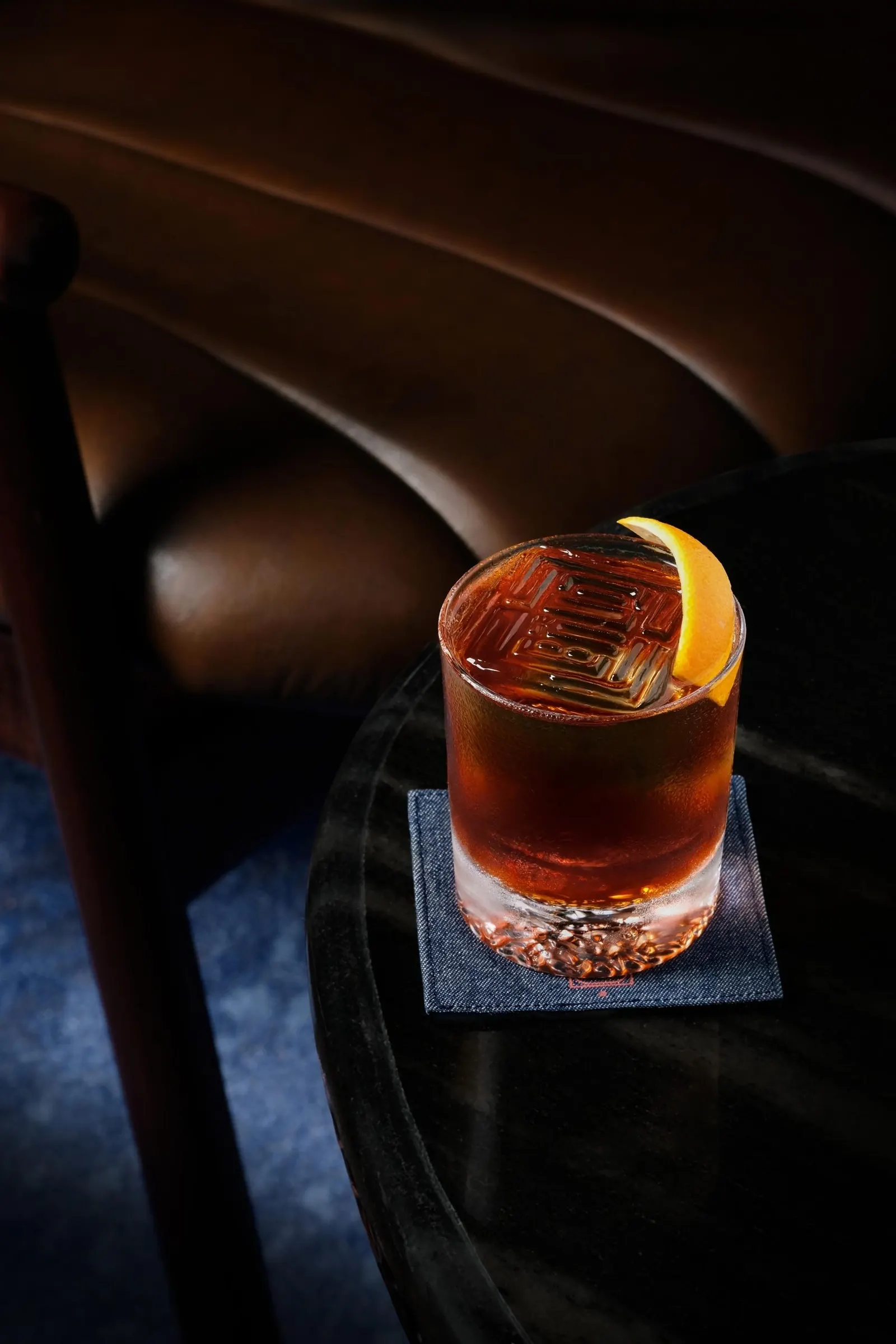
Kind of Blue is a matcha Old Fashioned, named for the Miles Davis album Kensho calls the best Davis ever made. He knows matcha is everywhere at the moment, in lattes and now in cocktails, and he is happy to use that. But the drink is also his argument about the word ao: something calm, a little sad, and the colour of a mountain in Japan before anyone thought to call it green. The base is Nikka whisky.
Velvet Cherry
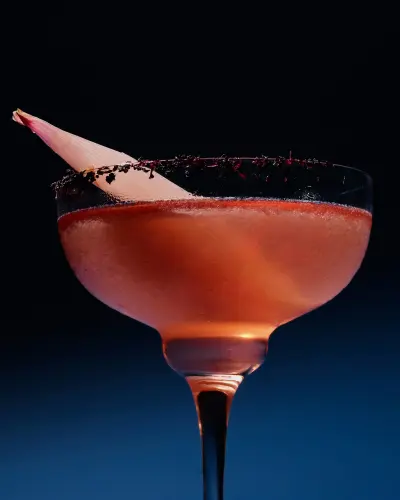
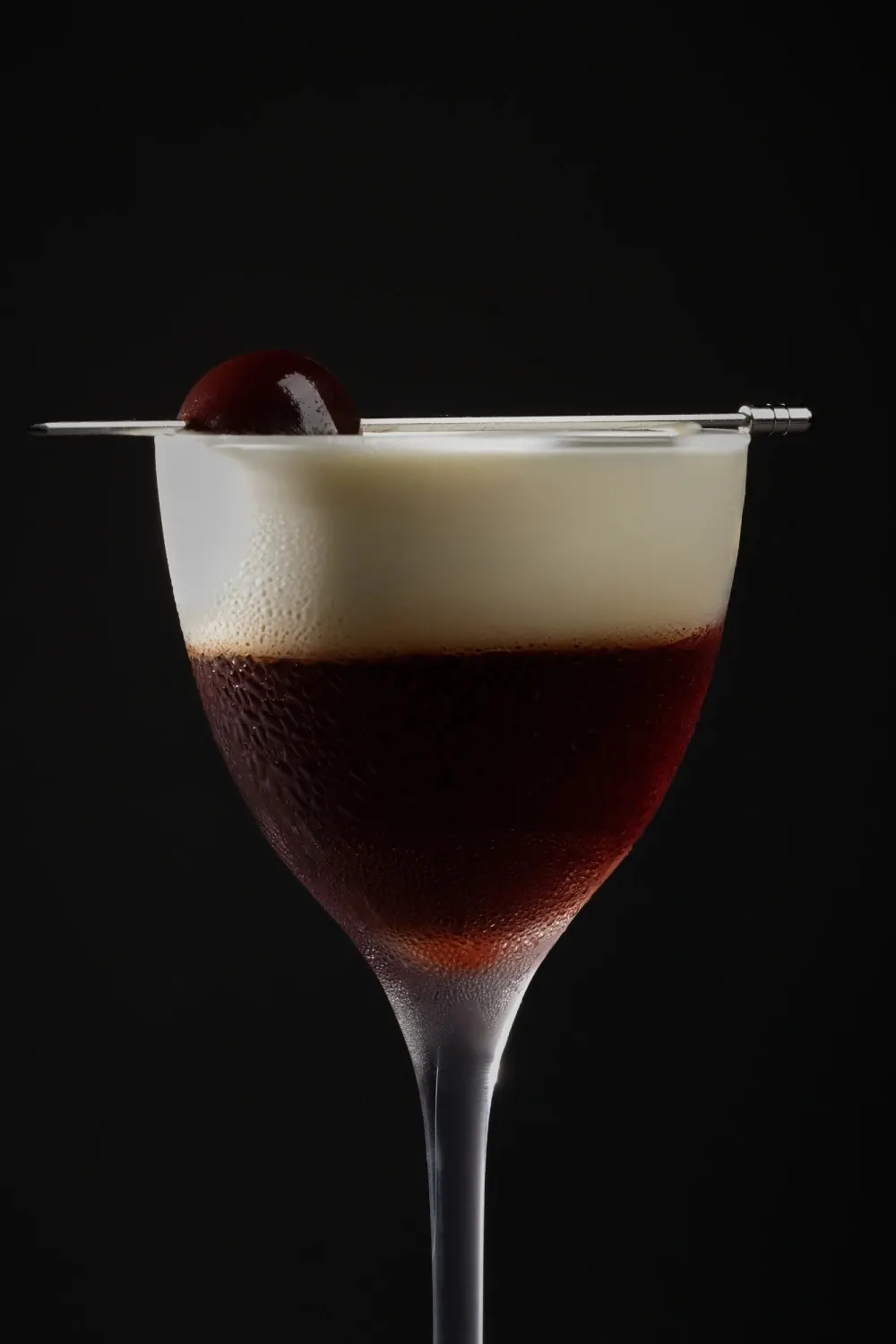
Velvet Cherry is the cheesecake of the three. It is built around cascara, the dried skin of the coffee cherry, which coffee farms used to throw away and which has only in recent years found its way into tea. Cascara is a little sweet, a little bitter and a little sour, and its acidity is what Kensho works with. Brandy and cherry liqueur sit at the bottom, and a layer of cream cheese goes on top.
"I'm thinking this one is like a cherry cheesecake."
He also has firm views on who orders it most. We will leave that one with him.
From Jatiluwih to the glass
AOKU keeps its own garden at Bara Mountain Cabin in Jatiluwih, the rice terrace country in Bali's highlands. The bar grows herbs, flowers and other ingredients there, which go straight into infusions, garnishes and the drinks themselves.
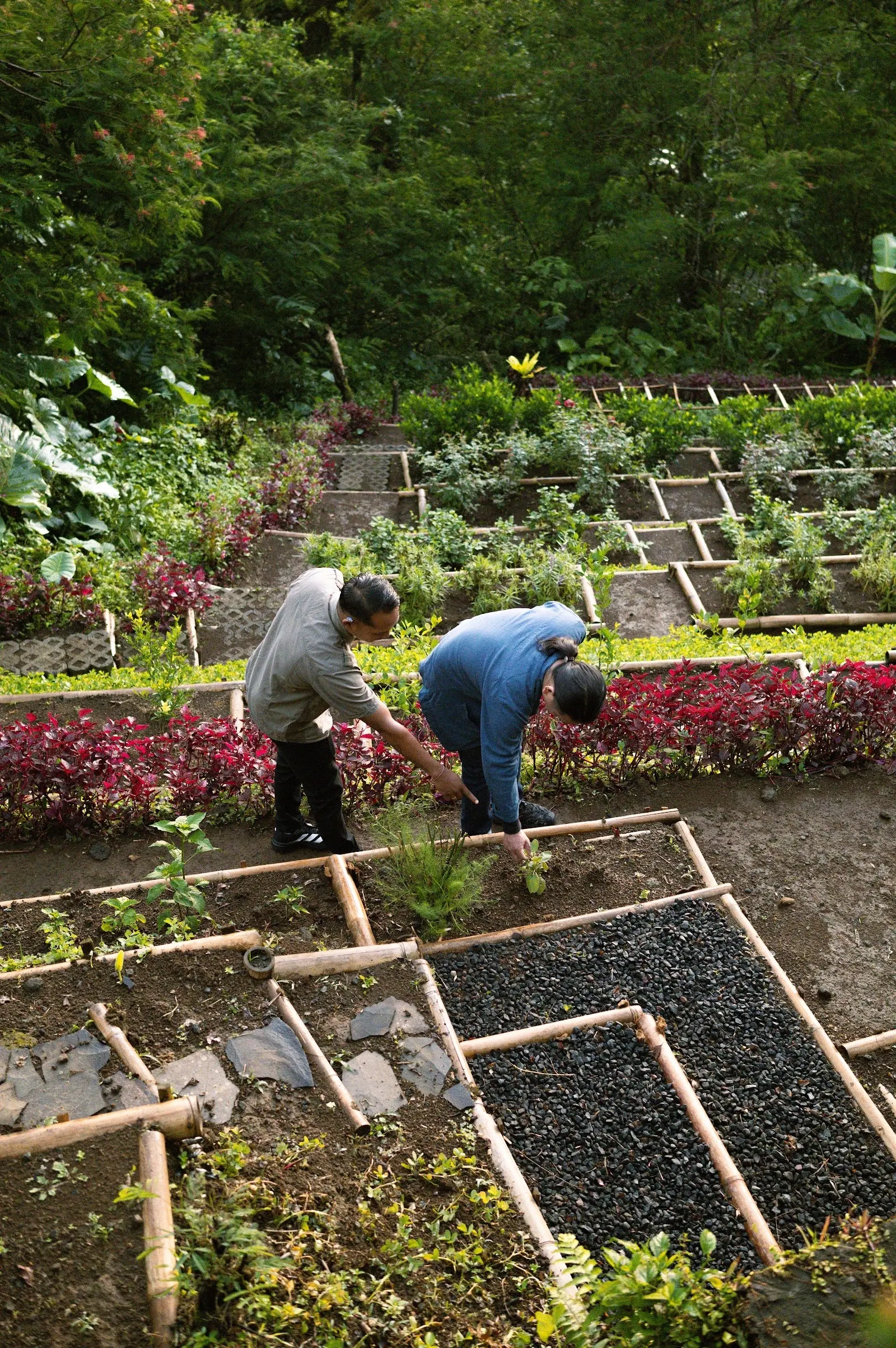
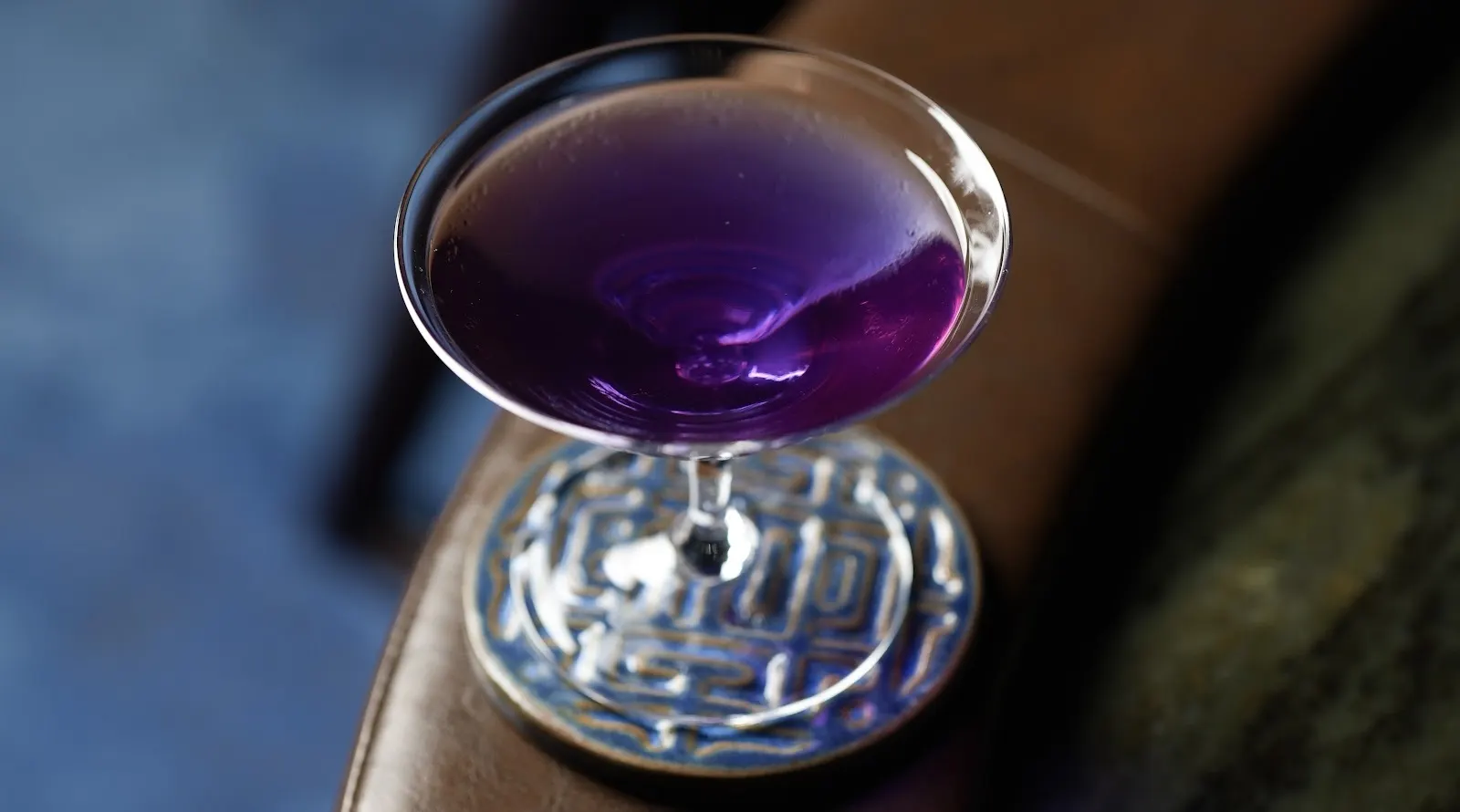
Kensho is wary of the local-ingredient pitch that every bar in Bali now makes. In his written answers, he says the point is to have a real relationship with where an ingredient comes from, not just to talk about it. The drink he points to is Murasaki, coloured with butterfly pea and scented with rose.
The hard part, he says, is balance between his training and the island.
"I don't want the Japanese technique to cover the Indonesian ingredient, and I don't want the local ingredient to become just a decoration."
He does not want to make Japanese cocktails or Indonesian cocktails. He wants both halves to make sense in the same glass, which, if you have been paying attention, is also what he admires about a Miles Davis band.
After dinner, and after that
Dahana's kitchen sits downstairs, and the food at AOKU comes up from it. Kensho is clear that upstairs is a different experience. At Dahana the food can be the main event. At AOKU, plates are chosen to be easy to share, to work with alcohol and not to interrupt the night. The drink stays at the centre.
That is also how AOKU sits within Kaminari. The group's other venues each have their own food identity. AOKU is the late-night one, the place you go after dinner for a classic, a signature or something bespoke, and then one more.
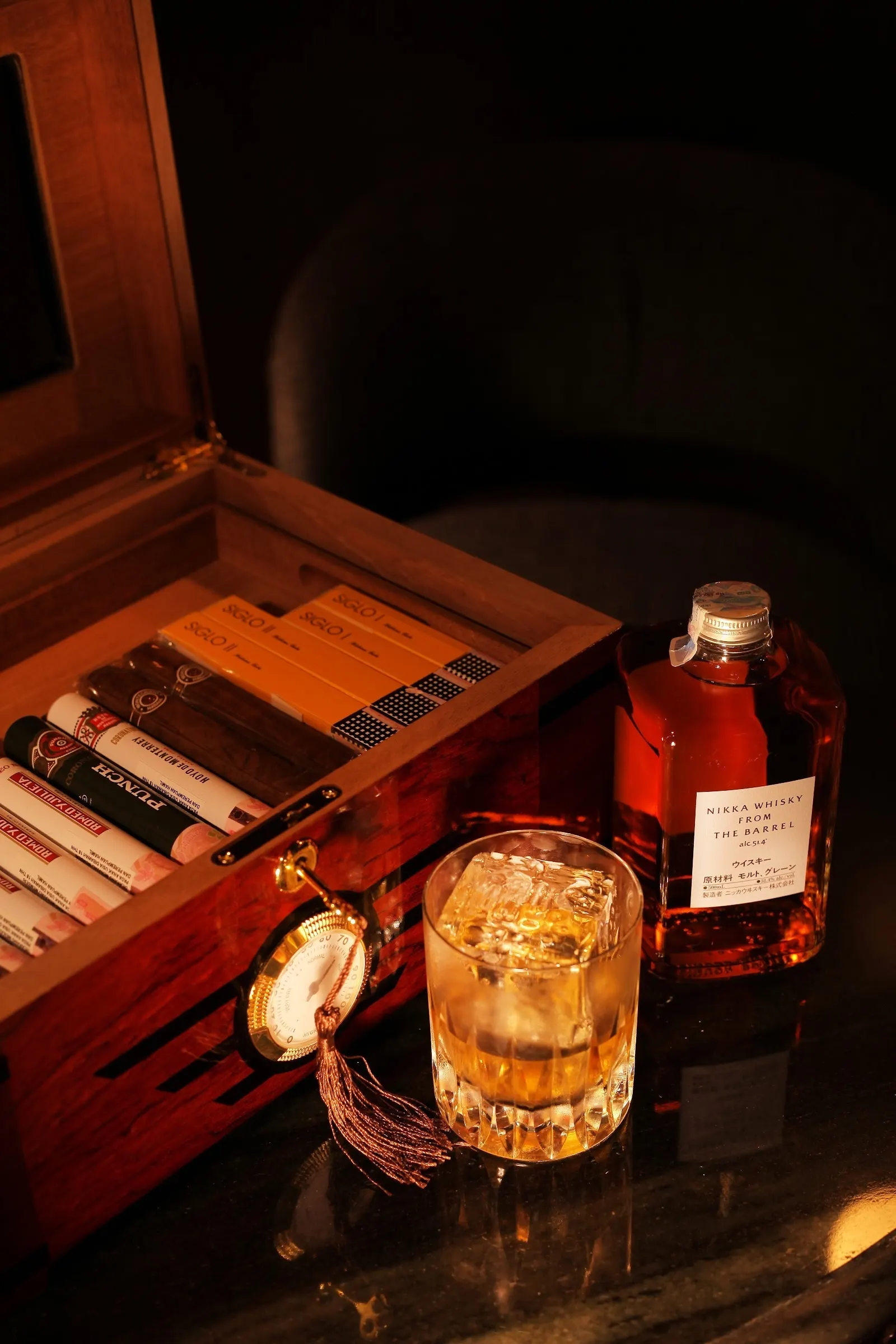
Later still, there is whisky and there are cigars. Kensho sees this as a separate, slower chapter of the evening.
"A cocktail can change quite quickly, but whisky and cigars are about spending more time."
The whisky warms in the glass, the aroma opens, the cigar changes as it burns. It is, in his words, for when you want to slow everything down even more.
What to order
Kensho's plan for two people coming for the first time is specific. Arrive around 8pm, after dinner. Sit at the bar rather than in a booth, because the bar is where you talk to the bartender and understand what AOKU is doing. Start with a classic. For the second round, order one of the signatures, or tell the bartender what you like and let them build something bespoke.
If you are going signature, So What is the safe bet, Kind of Blue is the one with the story, and Velvet Cherry is the one to share if you skipped dessert downstairs. Murasaki is the drink that comes closest to the garden.
Cool on the outside
Asked what he wants people to leave with, Kensho goes back to the colour. Calm, he says, but inspired. Cool and controlled on the outside, with something passionate underneath.
He would settle for less, too. If people walk back down the stairs to Petitenget thinking "that was different, but it felt natural," he says, AOKU has done its job.
Then again, it is a very good bar. So what?
AOKU
Seminyak, Bali
A Japanese speakeasy cocktail bar upstairs from Dahana on Jalan Petitenget, from the Kaminari group. Classics, 18 signatures, bespoke drinks, whisky and cigars.
See AOKU on Supper SocialFrequently asked questions
What is AOKU?
AOKU is a Japanese speakeasy cocktail bar in Seminyak, Bali, run by the Kaminari group (Rayjin, Kajin, Dahana). It serves classic cocktails, 18 signature cocktails, bespoke drinks made to order, whisky and cigars.
Where is AOKU?
AOKU is on Level 2 of Dahana Restaurant, Jl. Petitenget No.98Z, Seminyak (Kerobokan Kelod), Bali. The entrance is upstairs from Dahana.
What time is AOKU open?
AOKU is open daily from 7pm to 1am, with last orders at 12:30am.
What does AOKU mean?
Ao is the Japanese word for blue. At AOKU it refers both to jazz, particularly Miles Davis, and to nature, as ao has traditionally also been used for green in Japanese.
What should I order at AOKU?
Kensho Hirai recommends starting with a classic cocktail at the bar, then moving to a signature such as So What, Kind of Blue or Velvet Cherry, or asking for a bespoke drink.
What is a bespoke cocktail at AOKU?
The bartender asks what you normally drink, which flavours you like and how you feel that night, then builds a drink from the structure of a classic, with one small surprise.
What time should I arrive at AOKU?
Kensho suggests around 8pm, after dinner, with a seat at the bar for a first visit.
Does AOKU serve food?
Yes. Sharing plates come from the kitchen at Dahana downstairs, chosen to go with drinks.
Do I need to book AOKU?
Bookings are taken through Chope or on WhatsApp at +62 851-2357-3571. The booking link is in the @aokubali Instagram bio.
AOKU at a glance
Venue: AOKU
Type: Japanese speakeasy cocktail bar
Area: Seminyak
Address: Dahana Restaurant Level 2, Jl. Petitenget No.98Z, Kerobokan Kelod, Kuta Utara, Badung, Bali 80361
Hours: Daily, 7pm to 1am (last orders 12:30am)
Price: Cocktails from IDR 160k++ (tax and service)
Bookings: Phone/WhatsApp +62 851-2357-3571
Instagram: @aokubali · Kensho Hirai @kensho.129
Website: kaminarigroup.com
Group: Kaminari (Rayjin, Kajin, Dahana)
Share this story