Restaurant Bathrooms Have a People Problem
About twenty years ago, I joked to my father that I might follow in his footsteps as a restaurant critic, with one important difference: I’d only review the bathrooms.
It was mostly a joke, but there was logic buried in it. Restaurant bathrooms tell you a remarkable amount about a venue. You can usually tell within thirty seconds whether the design budget stopped at the dining room, whether someone cared about the lighting, whether the soap was chosen deliberately, whether the mirror works, whether the lock feels like it was installed by someone who has actually used a toilet before.
For years, I thought that was the test. A good bathroom meant somebody had paid attention.
The test was backwards
Recently, after visiting a brand new restaurant with a genuinely beautiful bathroom, I realised I had the test backwards.
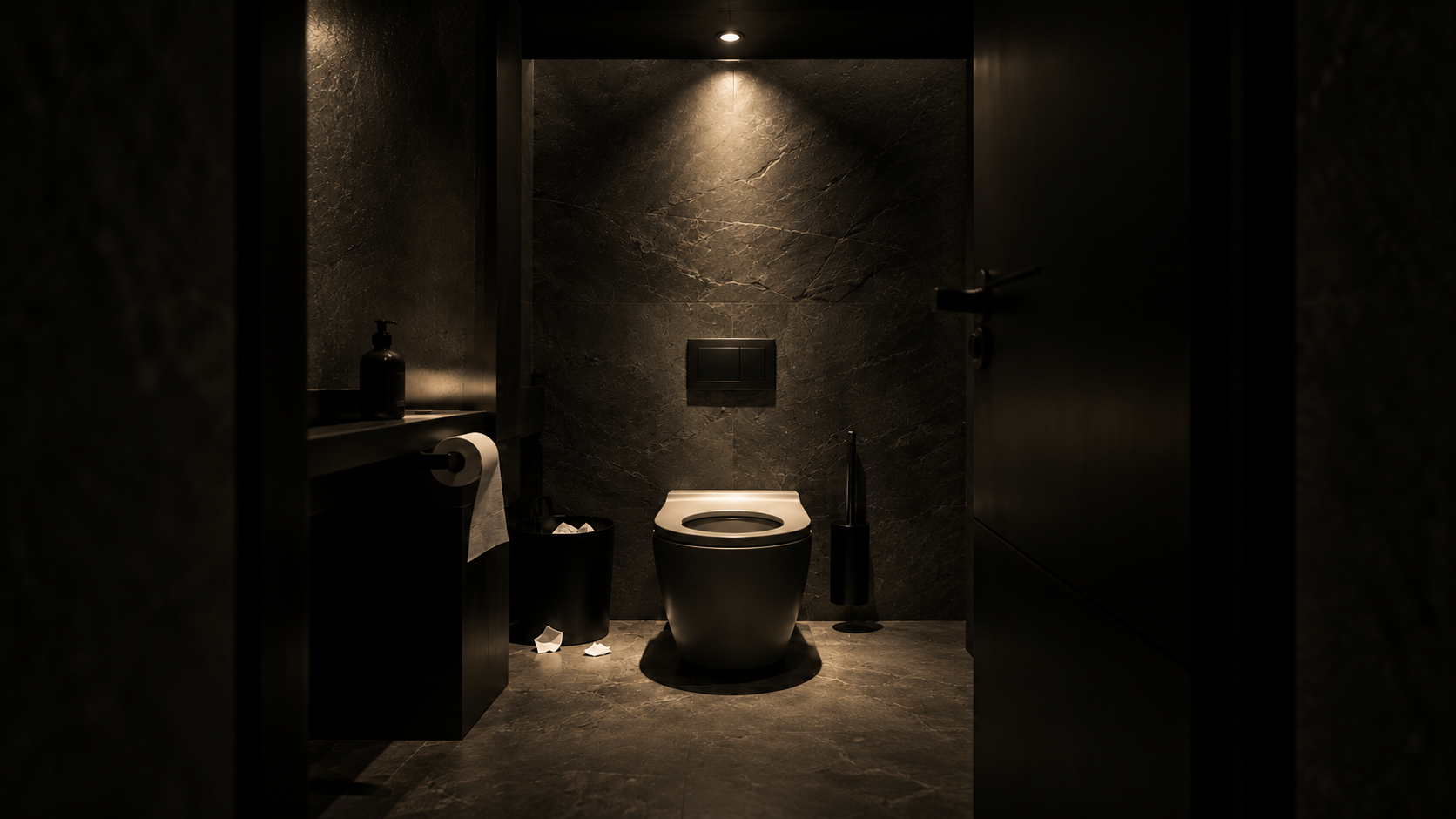
The venue had done everything right. The room was immaculate, considered and clearly expensive. What happened after service began had considerably less to do with the restaurant and considerably more to do with the people using it.
I won’t describe what I found. Nobody needs that level of detail from a hospitality publication.
But it did make one thing very clear.
We spend an enormous amount of time judging how restaurants treat us and almost none judging how we treat restaurants.
Hospitality criticism is built around what the venue owes the guest. Was the table clean? Was the wine cold? Was the food hot? Was the service attentive? Were the bathrooms spotless? All perfectly reasonable questions.
But somewhere around the middle of service, cleanliness becomes a shared responsibility whether anyone wants to admit it or not.
A bathroom can be perfect when the doors open and destroyed a few hours later by people who would presumably never behave that way in their own homes. The strange part is that the next person who walks in rarely thinks, what kind of animal was in here before me?
They think, this restaurant needs to clean its bathroom.
That feels slightly backwards.
Nobody is watching
There is something fascinating about the behavioural shift that happens once the cubicle door closes. In the dining room, people are composed. They are dressed properly, talking politely, ordering natural wine, photographing the food and perhaps explaining at unnecessary length where they went in Tokyo last year.
Then they walk ten metres down a corridor, close a door and suddenly behave as though all social conventions have been temporarily suspended.
Nobody is watching.
That might be the point.
Hospitality is a performance on both sides. Staff are expected to remain polished in public, and guests tend to do the same while they are visible. The bathroom removes the audience. What happens there is probably a more honest indication of how much respect someone has for the place they are visiting than anything they do at the table.
The Bali bathroom
This feels especially relevant in Bali, where restaurant bathrooms have become part of the design language of the venue itself. Terrazzo, stone basins, custom mirrors, expensive hardware, proper hand wash, lighting designed to make everybody look marginally healthier than they actually are.
We notice all of it. We photograph it. We post it. We talk about the bathroom almost as much as the dining room.
Maybe the least we can do is leave it looking vaguely like the room we were so impressed by five minutes earlier.
Behind every trashed bathroom is somebody who has to clean it.
Usually a member of staff who has already spent an entire shift clearing tables, carrying plates, polishing glasses, resetting sections and looking after people. Hospitality workers are not there to deal with behaviour that most adults would be embarrassed to admit to in daylight.
Neglect versus aftermath
None of this means restaurants get a free pass.
If a bathroom is neglected for hours, that is absolutely on the venue. If there is no soap, no toilet paper, overflowing bins or nobody checking the room during service, that is poor hospitality.
But there is a difference between neglect and aftermath, and anyone who has worked in hospitality knows exactly what that distinction looks like.
The problem is that guests rarely see the difference. They see the end result, and the venue gets the blame.
Maybe that is why the bathroom is such an interesting little test of hospitality. It is one of the few places in a restaurant where responsibility genuinely passes back and forth between venue and guest.
The restaurant builds it, stocks it, cleans it and checks it.
Then we walk in.
What happens next is on us.
The review I should have written
Twenty years after making that joke to my father, I still don’t intend to become a restaurant critic specialising in toilets.
But I may have finally worked out what the review should have been.
Not how clean was the bathroom? but what kind of guests had been using it?
Because sometimes the restaurant has already done its part.
The rest is basic manners.
Share this story